Highlands Holiday – Golden Gate, Lesotho, Camdeboo
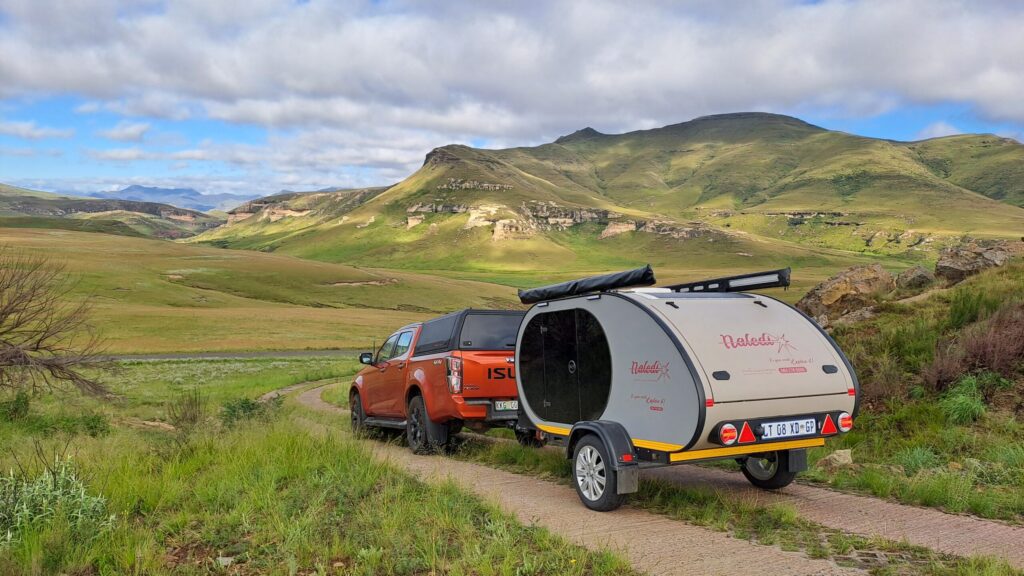
They say a change is as good as a holiday, but on our recent travel adventure, the change actually was the holiday.
What happened? Well, even though I had planned our December holiday travel route months in advance, due to unforeseen circumstances we had to leave those plans in the dust and ended up at completely different destinations.
To be honest, I think things turned out better than originally planned. So come along as we head from the Free State highlands across the border to Lesotho, and on to the world-renowned Valley of Desolation.
GEARING UP
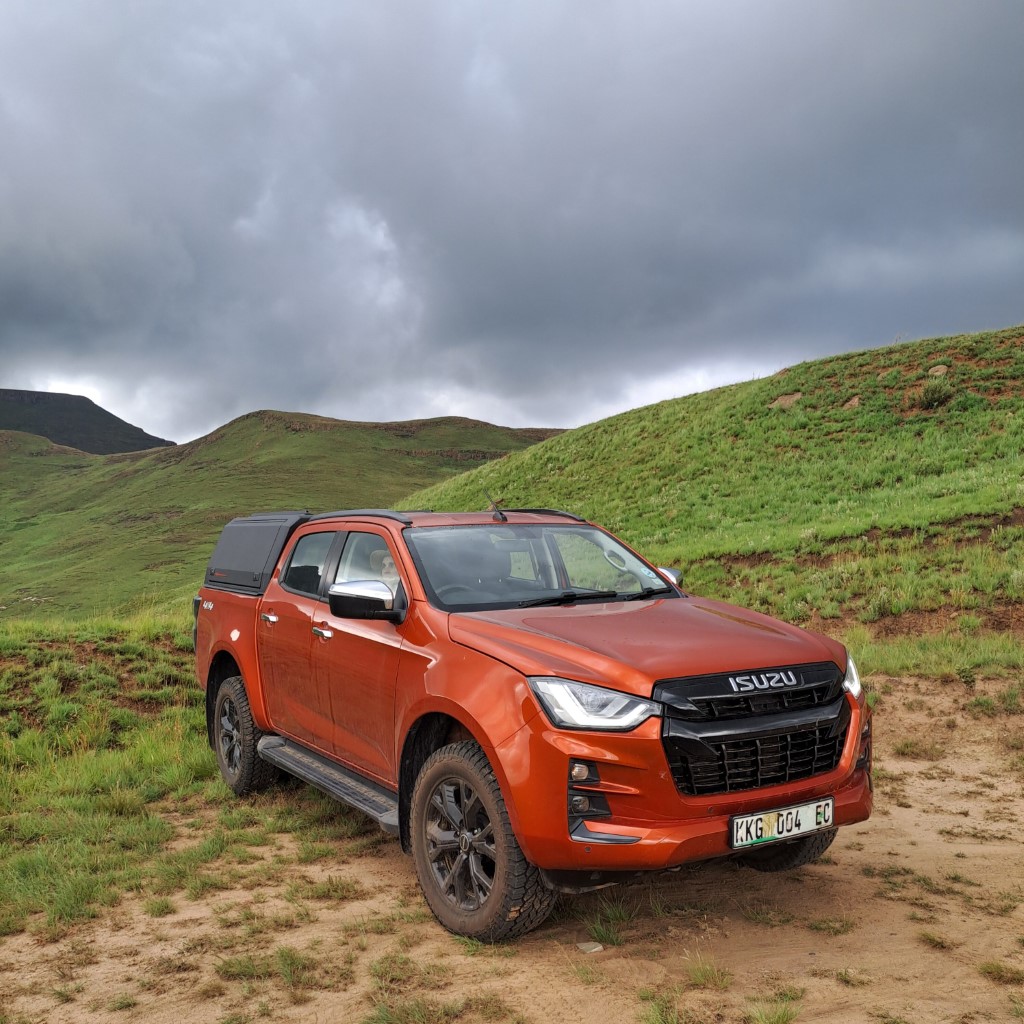
Our tow vehicle for the expedition was the ISUZU D-MAX 3.0 Ddi Double Cab 4×4 LSE A/T 45.
If you are a CaravanSA reader, you’ll know that I took the 1.9-litre D-MAX on a trip through Namibia a few years back, so you can imagine how excited I was for the top-of-the-range 45th model.
The 1.9 performed great (even handling a shredded tyre while towing on a dirt road like a champion), but this latest model of the D-MAX adds quite a lot!
Also adding comfort and style to our trip was what we would be towing: I’ve had my eye on the stunning Naledi teardrop camper since it launched at the Caravan Show in 2023.
Manufactured by Rider Automotive Components, the teardrop is unmissable with its massive windows and beautiful modern design (and yes, we got a lot of interest everywhere we went… not just in the campsites, but anywhere we stopped along the road).
Important note: For this trip, we were using the 2023 model of the Naledi. Unfortunately (for us), this little teardrop is so popular that the manufacturer did not have a single new unit available… in fact, when we met with Andre and Jake in late December to pick up the caravan, they told us they were still working full steam to complete four additional units they had on order for the month!
The latest model of the Naledi has quite a few changes and upgrades, which I cover fully in THIS ARTICLE. A few notable enhancements include the addition of another door, thicker safety glass equipped with smart-glass technology, a high-tech insulation upgrade, enhanced dust sealing, increased ground clearance, and more.
But let me tell you something: Even without the upgrades, this camper is absolutely amazing!

THE KAROO – JUST PASSING THROUGH
Our trip started in my home town of Hermanus, from where we headed north to meet the Naledi team.
We spent our first night in Hanover, a small Karoo town that is a popular halfway stop for travellers en route between the Cape and Gauteng.
There’s not much to do in Hanover: Take a walk through the dusty streets or up Trappieskop to see the Karoo surroundings, view the Dutch Reformed Church built in the 19th century, or visit the art gallery, Cenotaph Memorial (to those who died in WWII), or the Hanover Museum.
While Hanover does have some rural charm – and it’s one of the cleanest towns you’ll travel through – unfortunately like so many small towns across the country, signs of decline and poverty are quite evident. The church, library and many other buildings are falling into dereliction.

But the people are friendly, the beer is cold, and you’re sure to find some traditional Karoo cooking at your guesthouse or one of the handful of local restaurants.
We had dinner at 3 Darling Street Restaurant, which serves an impressively good pizza!

LIONSROCK BIG CAT SANCTUARY
After spending the night in Hanover, we continued north through Bloemfontein, exiting the N1 onto the N5 at Winburg, and met the friendly Naledi team in Senekal to collect the camper (thanks again to Andre and Jake for the extra effort of meeting us on the road).
Now that we had a proper fridge/freezer (in the Naledi), we headed east on the N5 to the town of Bethlehem to do some shopping.
Our first camping destination was the Glen Reenen Rest Camp in Golden Gate Highlands National Park, but since we were in the area we decided to spend a night at LIONSROCK – a sanctuary that is part of global animal welfare organisation FOUR PAWS, where my wife works.
The sanctuary is home to around 100 big cats rescued from around the world. Lions, tigers, leopards, etc., which were born in captivity or have spent most of their lives in captivity, cannot be released back into the wild.
At LIONSROCK, the animals are protected for the rest of their lives and provided with a lifelong home and habitat appropriate to their species.

As one of the only True Sanctuaries in Southern Africa (also the oldest and biggest), LIONSROCK has a strict no-breeding policy, and there is no animal interaction – that means no petting, walking or feeding by the public. If you want to see the animals, you can book a guided tour.
While we did not camp at LIONSROCK, we got a first taste of what travelling with the D-MAX and Naledi is like. The sanctuary is just 18km outside Bethlehem, and a big section of the road is quite rough.
It was already quite clear that the Isuzu is a great towing vehicle… which I knew from previous trips, but the 3.0-litre barely felt the caravan, and the Naledi followed behind like it was part of the car!

GOLDEN GATE HIGHLANDS NATIONAL PARK
Golden Gate National Park is in the eastern Free State, just north of Lesotho, right where the landscape starts to morph from undulating farmland into epic sandstone mountains.
We actually entered the park from the eastern side – it’s a bit longer route from Bethlehem, but since I knew we would be heading out towards Clarens, I wanted to make sure we drove through the whole park.
The only camping option in Golden Gate is the Glen Reenen Rest Camp, located right in the heart of the park, just off the main road.
On the one side of the road you’ll find the SANParks office (check in here before you enter the camping site on the other side of the road), a small shop, fuel station, and the self-catering accommodation (rondavels, longdavels, and family cottages).

GLEN REENEN REST CAMP
The campsite area is situated at the foot of the mountains with stunning golden-hued rock formations.
Looking up from the campsite, Mushroom Rock lies to the right, and Brandwag Buttress (which means ‘Sentinel’ in Afrikaans) to the left.
Glen Reenen Rest Camp offers about 60 camping sites, all of which are grassed, with some that also have a paved section. There are big indigenous trees throughout the campsite, providing most of the stands with shade.
When booking online for Glen Reenen, you can choose between a site with or without electricity. Sites with electricity are a bit more expensive, but you might as well save those few rand and just book the cheaper option, because there’s no control over who camps where. At reception, you will be told to “pick any spot”.

Sites are not demarcated, and the only indication of borders are the power points and braais.
Glen Reenen has two ablution blocks – which were spotless any time I went inside – with toilets, showers and basins.
There is also a dedicated scullery/kitchen area with a couple of double basins, as well as two-burner gas stoves.
Most of the campsites along the river have cement braais, but you might have to share with your neighbour. Sites on the road side of the camp have steel braai facilities.
The campsite was surprisingly full when we arrived, but we managed to find a beautiful spot right next to the river that also runs past one side of the camp.
It took only moments to put the Naledi in place and attach the awning. We faced the caravan towards the mountains and the little stream, then added the sidewall for extra privacy from the bustling campsite around us.


HIGHLANDS HIKING
With our site set up in minutes, we were ready to explore.
Most of the hiking trails in Golden Gate Highlands National Park can be started right at Glen Reenen.
First, we headed to Echo Ravine, a route of just 2 kilometres that leads into a deep cleft in the sandstone cliffs.

The path winds gently upwards and runs alongside rock faces streaked with ochre tones, and as we got deeper into the ravine, the overhanging cliffs created a serene enclosure with a distinct echo whenever you spoke.
Deep in the ravine, we stopped beneath the high overhangs to enjoy some warm coffee. A gentle rain started to fall, and it was wonderful to watch water droplets slipping from the rock edges above while we stayed perfectly dry beneath the protective outcrop.

As we decided to head back, we could hear a classic highlands thunderstorm building… there’s nothing quite like hearing thunder reverberate across these sandstone mountains.
Since the Echo Ravine hike is relatively short, we thought we would squeeze in the Mushroom Rock trail as well. This track is even shorter, around a kilometre or so from Glen Reenen, and takes you up to a striking rock formation that appears to balance precariously like a massive mushroom.
The rain turned into a proper downpour, and after a brief attempt at finding shelter behind a cluster of boulders, we decided it was best to head back. We were soon drenched from head to toe, though at least it wasn’t cold.

Back at Glen Reenen, there was the sweet relief of a piping hot shower in the communal ablution block.
By now it was late afternoon, and while my wife retreated into the Naledi, cosying up on the double bed and peering through the large window at the grey skies, I made some dinner and we headed to bed after a busy day.

We were up around sunrise to tackle the next adventure on our list: the Brandwag Buttress trail. This short yet scenic hike sets off from Glen Reenen Rest Camp, heading through gentle undulations before leading you to a series of fixed chains that help you climb partway up the sandstone cliffs.
In Afrikaans, “Brandwag” means “Sentinel,” and these golden rock faces are particularly striking at both dawn and dusk, when sunlight bathes them in vivid reds and oranges. It’s easy to see how the name “Golden Gate” took hold here.
The trail itself is well marked and, despite its fairly modest distance, rewards you with sweeping views of the park’s mountainous expanse. There’s also a route that begins at the Golden Gate Hotel, and many hikers choose to make a loop by ascending one path and descending the other.
Since we still had most of the morning ahead, we decided not to hike the loop, but rather to extend our outing by venturing a little way along the Wodehouse Trail.
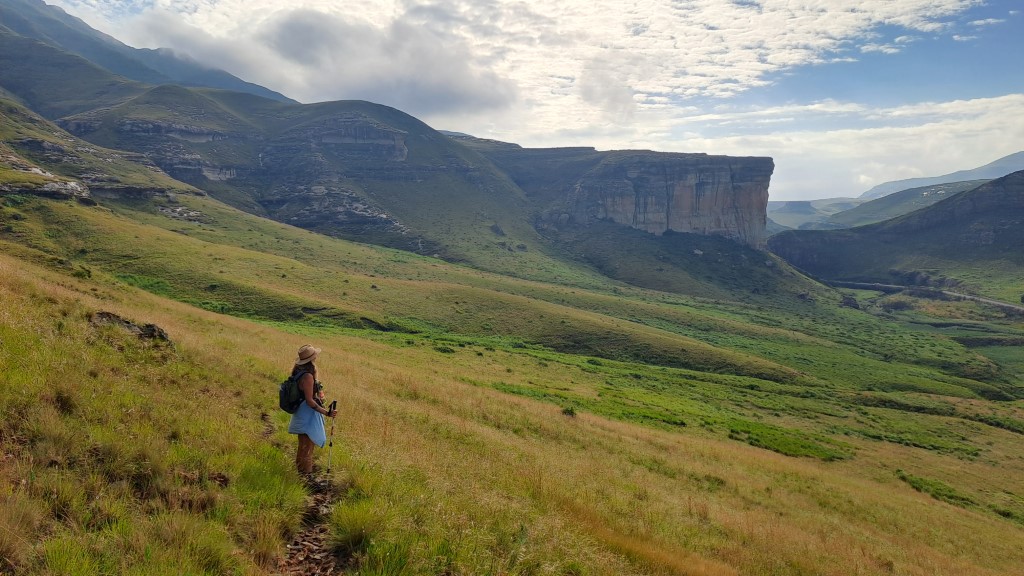
This route covers well over ten kilometres in total and is regarded as one of the more difficult hikes in Golden Gate, taking you deeper into the highlands with plenty of steep ascents and descents.
We only pushed on until we reached a lovely viewpoint where we paused for a coffee.
From that vantage point, we spotted a small herd of wildebeest roaming across the upper slopes, a stark reminder that while the park is known for its dramatic sandstone formations, its wildlife is just as much a part of the magic.
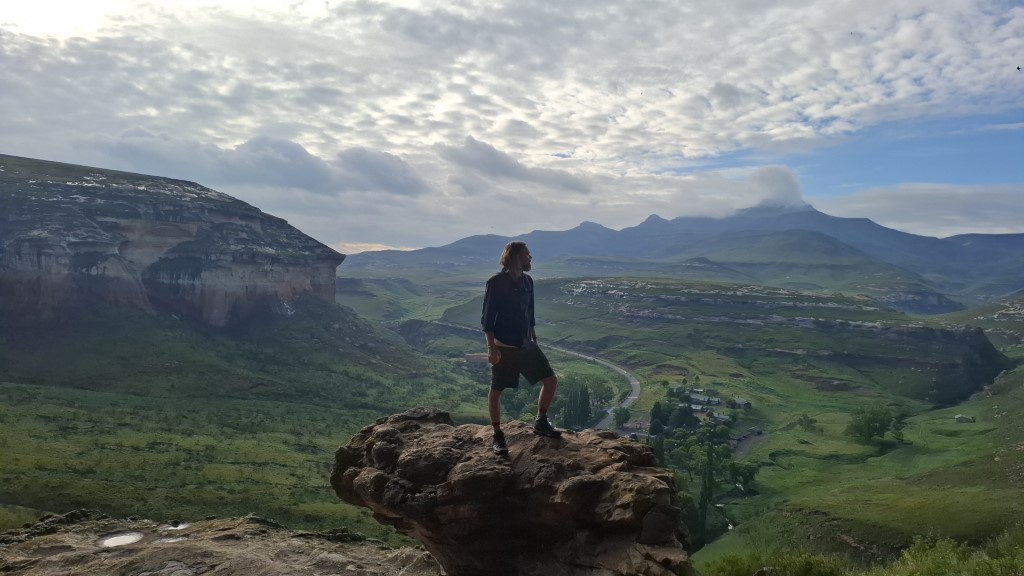
We turned back at that point and retraced our steps to Glen Reenen.
By the time we returned, we were properly hot and sweaty. The slopes of the Maloti mountains can be deceptively punishing, something we would face again in Lesotho later on.
To cool off, we followed a short footpath behind the camp’s office buildings and rondavels to a small waterfall. It’s more of a trickle running over rocks than a grand cascade, and the concrete structures near the pool have certainly seen better days, but it served its purpose.
We slipped into the chilly water, grateful for any respite, and then stretched out on the warm rocks to let the sun soak into our tired muscles.
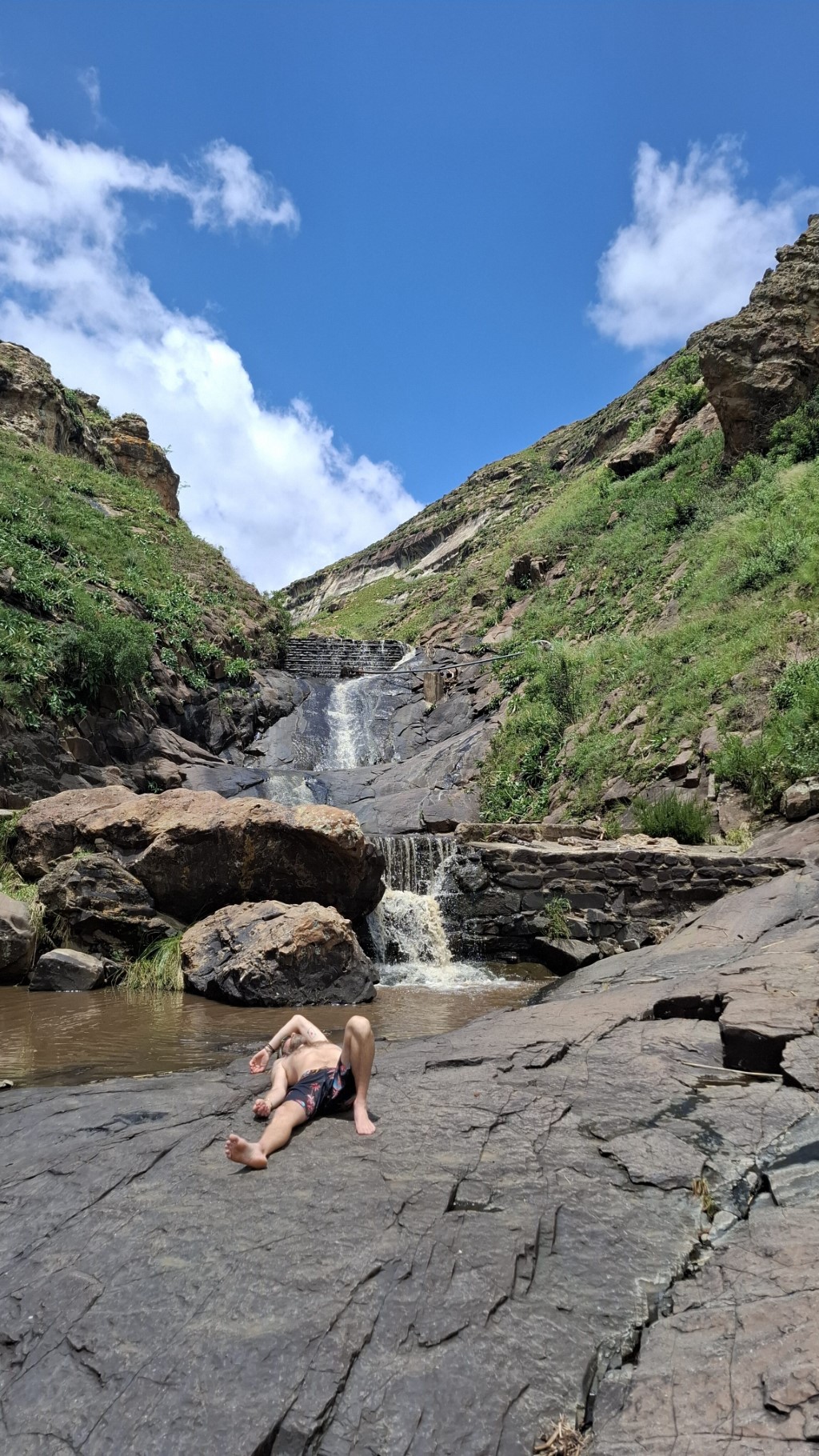
We wandered back to camp for lunch, and that’s when the real excitement began. The sky darkened and within minutes we heard the low rumble of thunder bouncing off the mountains.
The clouds opened in earnest, sending heavy sheets of rain pelting down onto Glen Reenen.
One moment, the campsite was bathed in bright sunshine, and the next, streams of water were racing along the roads and carving muddy channels through the lower sections of the camp.
Our spot was perched on slightly higher ground overlooking the stream, so we stayed safe and dry in the Naledi and beneath the awning. Sadly, a few fellow campers on lower stands found themselves battling flooded tents.

It didn’t take long for the weather to shift again. An hour or two later, the storm clouds thinned out, leaving behind glistening grass. That’s the Maloti highlands for you: a place where the elements rule, and you can go from warm sunshine and hiking boots to thunderclaps and torrents of rain before settling back into a calm, sunlit afternoon.
It was another reminder of how wild and wonderful the Free State highlands can be, and how quickly each day’s plans might change at the whim of the clouds.
When the rain had tapered off to a drizzle, we decided to jump in the Isuzu and explore more of the park.
EXPLORING GOLDEN GATE
Golden Gate Highlands Park has two short self-drive routes, the Oribi Loop and the Blesbok Loop. Both routes are neatly tarred, so even with the rains, no challenge for the D-MAX… we’ll get to some bumpy dirt roads later in Lesotho.
We started with the Oribi Loop, just over four kilometres of winding road with views that open up to the expansive Drakensberg in the distance.

On the Oribi Loop, one of the highlights is a stop at the Vulture Feeding Project, where visitors can sometimes see these remarkable birds up close.
The broader Maloti-Drakensberg region is home to several cliff-nesting vultures, notably the Bearded Vulture and the Cape Vulture. Through long-term projects like the Maloti-Drakensberg Vulture Project, conservationists aim to halt the decline of these species and rebuild their numbers.
The project provides a safe space known as a “vulture restaurant” – an undisturbed area where farmers and conservationists place non-toxic carcasses and meat scraps for the vultures. This helps them to find food when supplies run low, and it also keeps harmful substances like veterinary drugs away from their diet.
By disposing of waste in an environmentally friendly manner, farmers contribute to the survival of various vulture species, including those that struggle to find enough to eat when weather or seasonal conditions affect their normal feeding grounds.

We arrived in the late afternoon and saw no sign of the birds. They tend to be more active in the early morning or late evening, so we made a note to return the next day.
Before heading back to camp, we continued on the Blesbok Loop, which is about six or seven kilometres long.
This route is known for the Generaal’s Kop viewpoint, which looks out over rolling green valleys and sandstone cliffs. Even in the lingering gloom of the recent storm, the panorama was breathtaking.

After two action-packed days in Glen Reenen, we loaded up the Naledi once more, ready to head out west across Golden Gate towards the little art enclave of Clarens.
But first, since it was nice and early, we made another turn at the vulture project.
Again, we did not see the giant birds, but we were lucky to see a couple of black-backed jackal feeding on a fresh carcass!

After watching the jackals for about half an hour, it was time to move along.
Surrounded by sandstone mountains that shimmer at dawn and dusk, Clarens is often referred to as the “Jewel of the Free State.” Its village square is lined with galleries, craft shops, and cosy cafés, all offering a friendly welcome to passers-by.
We only had time for a takeaway coffee (and a bag of freshly roasted beans), but even that brief taste was enough to remind us why Clarens has become such a popular stopover for travellers heading in or out of Lesotho.
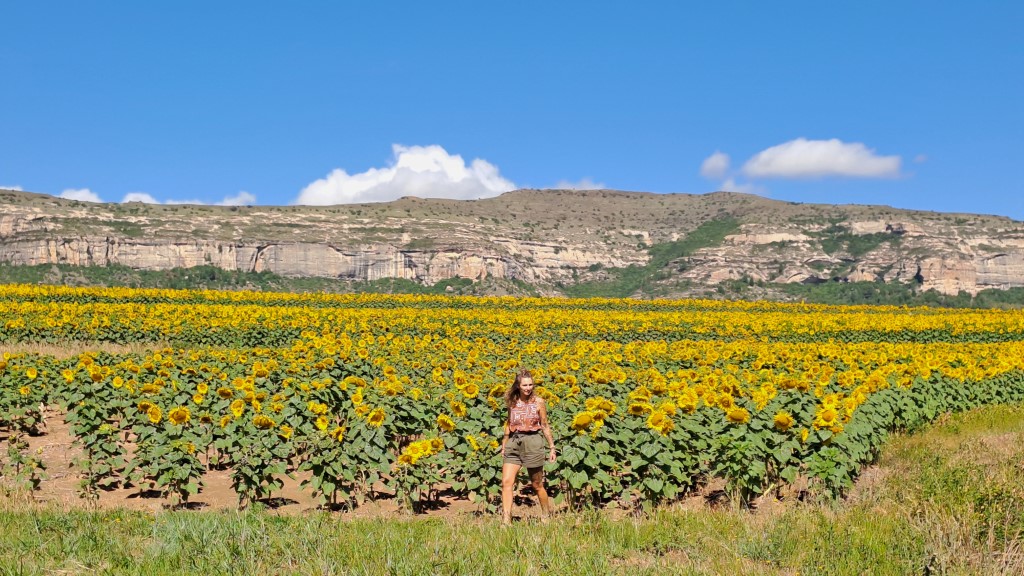
From Clarens, the R26 took us through Fouriesburg, Ficksburg, and Ladybrand. Along the way, we were treated to some stunning scenery in the form of a sunflower field in full bloom!
LESOTHO
Eventually, we arrived at the Maseru Bridge border crossing.
If you have travelled Africa, you know border posts can vary in efficiency, and one should always be prepared for potential queues, especially during peak season. But we had absolutely no trouble and were through in less than 10 minutes. Having all your documents in order will significantly speed up the process.
We had our certified vehicle registration papers ready, along with a letter of authority (since I am not the registered owner of the Isuzu D-MAX or the Naledi). The border guards, in good spirits, inspected everything thoroughly and joked that if we were in school, we would earn an A+ for our preparation.
We sailed through without any fuss and found ourselves in Maseru, heading south along the A2 highway.
Sidenote: You are going to lose cellphone signal almost immediately after entering Lesotho. So either make sure you have a GPS, proper directions to your destination, download your maps, or buy a prepaid simcard at one of the shops just inside the border post.
The speed limit in Lesotho is mostly about 50km, with some sections on the main highways pushing up to 80km – signage is few and far between, so I recommend sticking to 50km/h if you are unsure, because you are guaranteed to encounter a few police stops along the way.
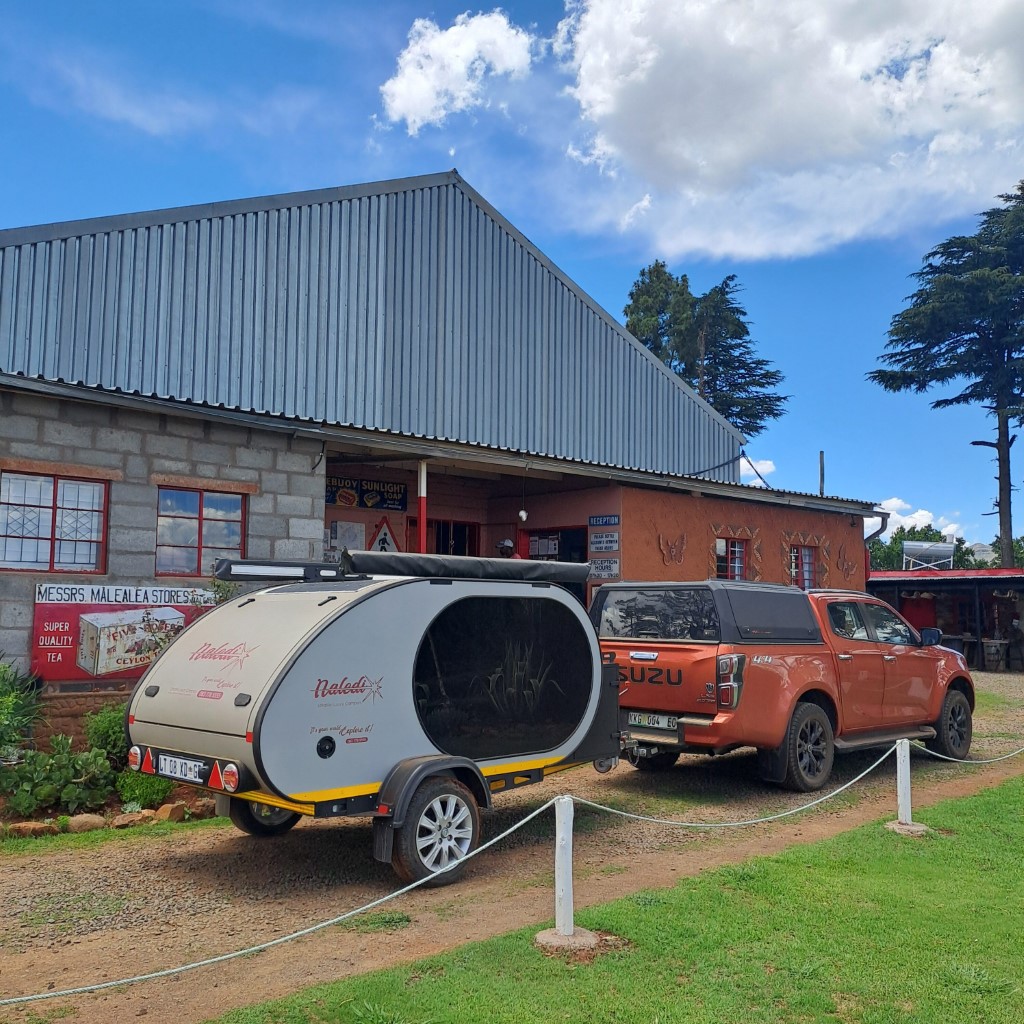
And if you are driving a brand new, bright orange, top-of-the-line Isuzu D-MAX and towing a stunning Naledi, you are definitely going to be stopped every time. I don’t think I was asked once for my papers or licence in Lesotho, but the cops all wanted to check out the Naledi.
Don’t let these stops bother you. The people of Lesotho are friendly, and a big smile and greeting of “Lumela” goes a long way!

Moving on, it’s slow going. Because even though the road might be nice and neatly tarred, there are often big potholes that can catch you by surprise if you are not paying attention. Also, be on the lookout for animals in or on the side of the road – not just farm animals, but also dogs.
At Motsekuoa, we turned onto the B40, and soon the tarred surface gave way to gravel road near Matelile.
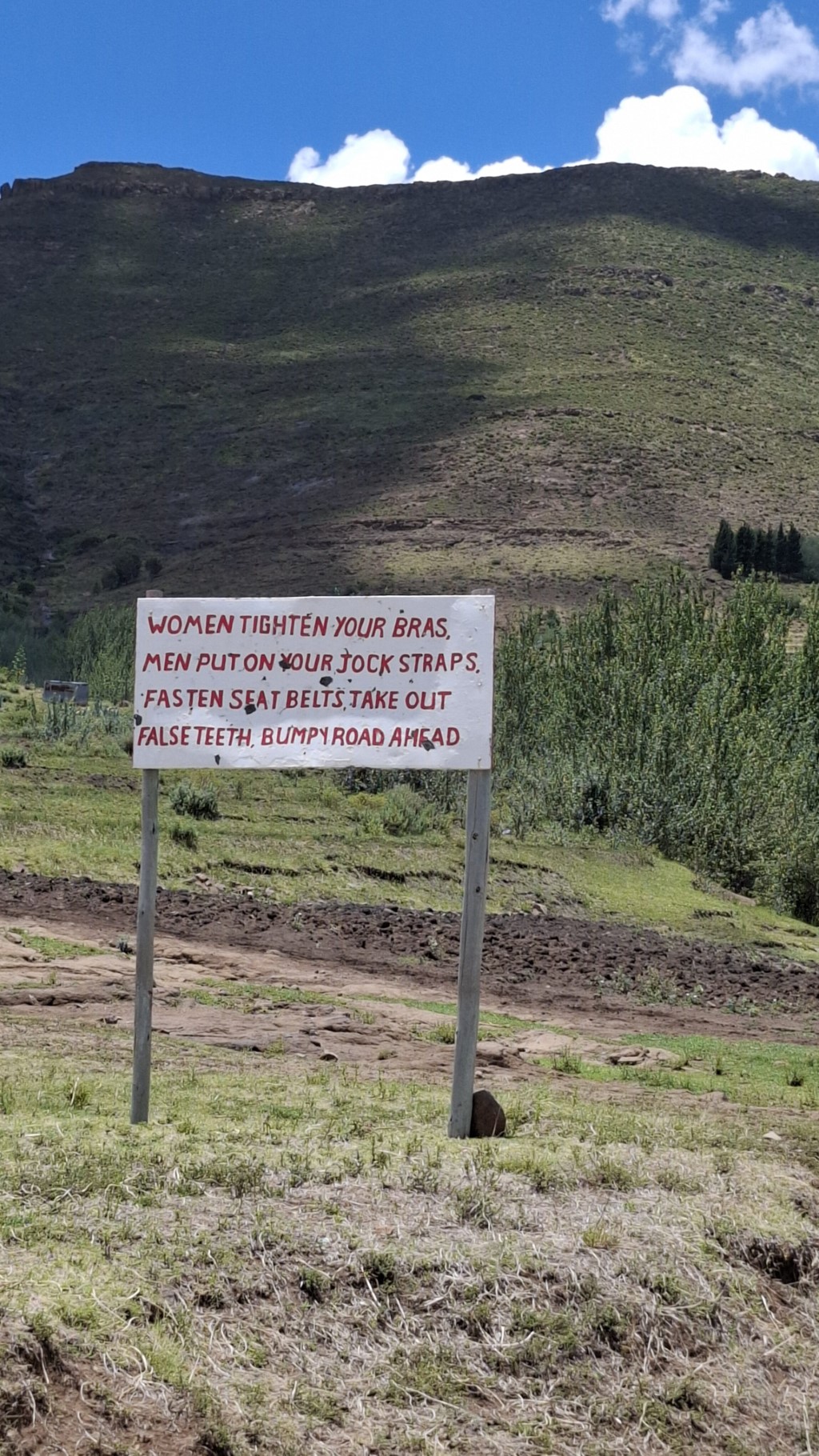
This last seven kilometres to Malealea Lodge might not sound like much, but the drive can easily take more than half an hour because of the corrugations, holes, uneven surfaces, and plenty of loose rocks.
The rough track became our first proper test of the Isuzu and Naledi together. The D-MAX simply shrugged off the challenge, powering up each incline without hesitation and letting the hill descent control handle the steep dips. The Naledi followed smoothly behind, its sturdy chassis soaking up the bumps like a pro.

This road also includes the Gates of Paradise Pass, which climbs gently to a summit about 4.3 km along, with gradients reaching 1:5 in places.
The view at the top was worth every jolt, revealing a panorama of rolling hills and rural villages, the perfect introduction to the western corner of Lesotho’s mountains.
Just after midday, we reached the gates of Malealea Lodge.
MALEALEA LODGE
Malealea Lodge sits in the remote western highlands of Lesotho, nestled in the Makhomalong Valley and surrounded by the towering Maloti Mountains. The lodge dates back to 1905, when it began as a simple trading post established by Mervyn Bosworth Smith, an Oxford-educated colonial figure who sparked the growth of the small village that now shares the same name.
At an elevation of around 1 800 metres, the lodge offers wide-open views of the rugged peaks that define the Lesotho skyline.
Accommodation options at Malealea range from camping to traditional thatched Basotho huts with communal bathrooms, forest huts with en-suite showers, and rustic farmhouse rooms that offer a touch of extra comfort.
In a grassy section of the lodge’s lower grounds, campers can pitch their tents or park small caravans and enjoy the feeling of being enfolded by nature.
Malealea has no demarcated camping sites, so pick a spot below the big pine trees and relax.

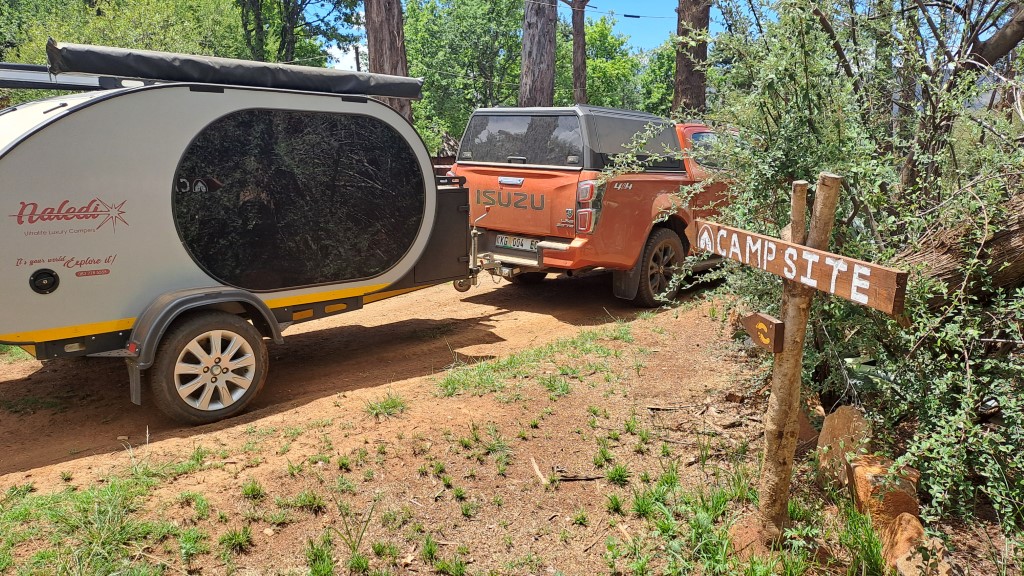
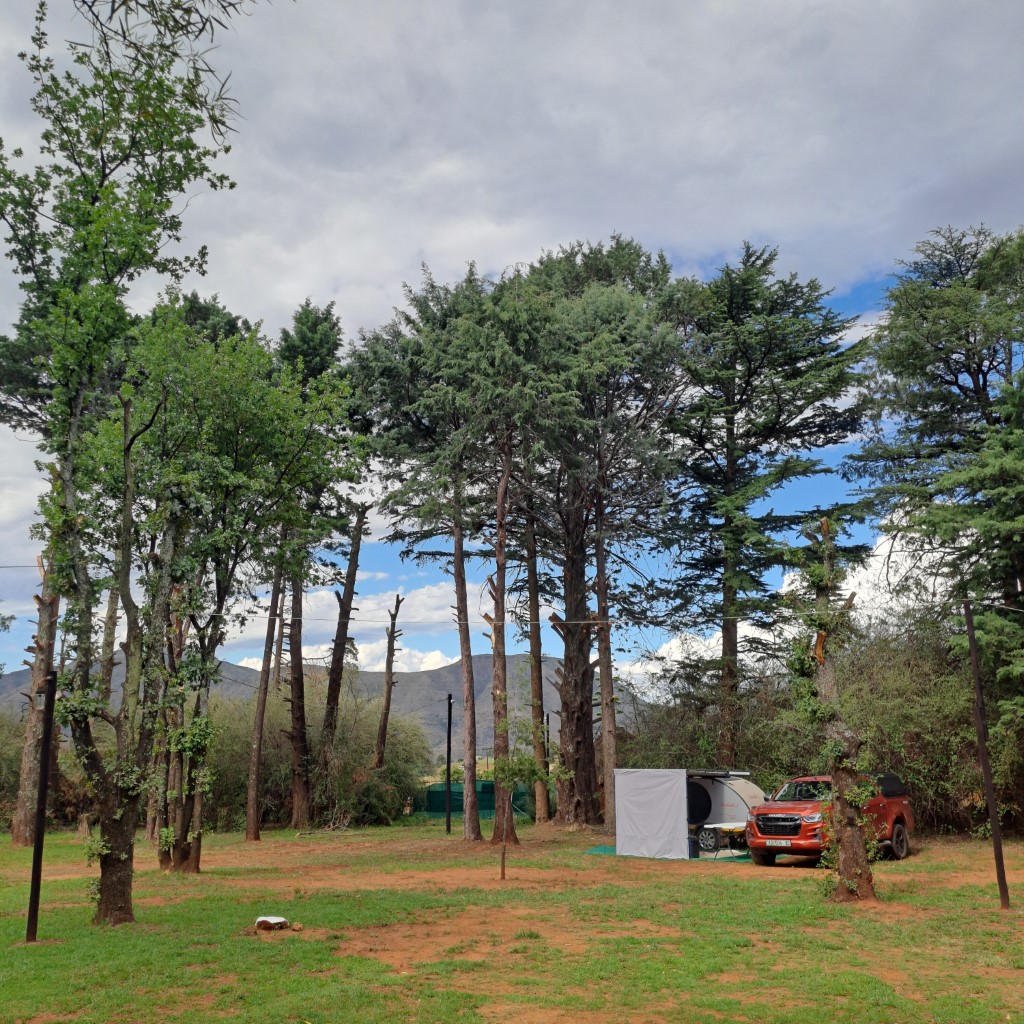

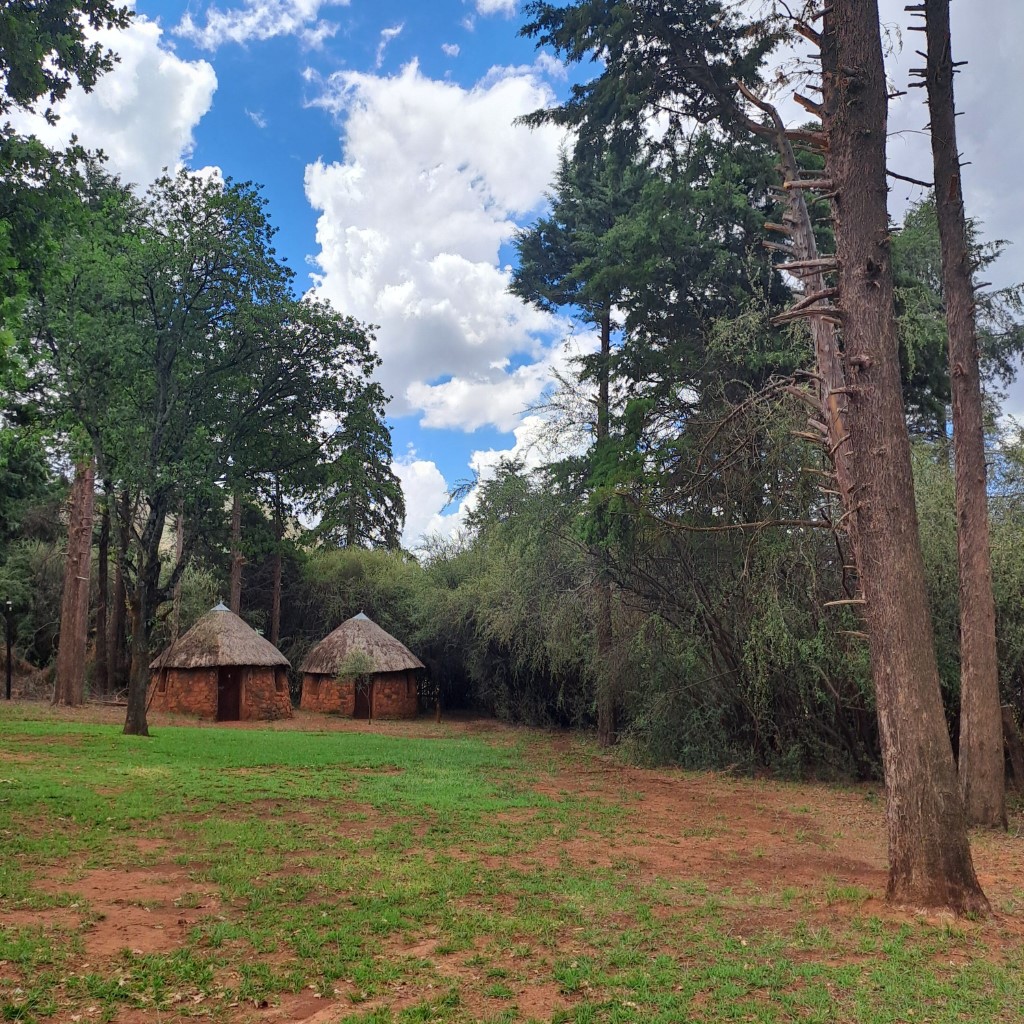


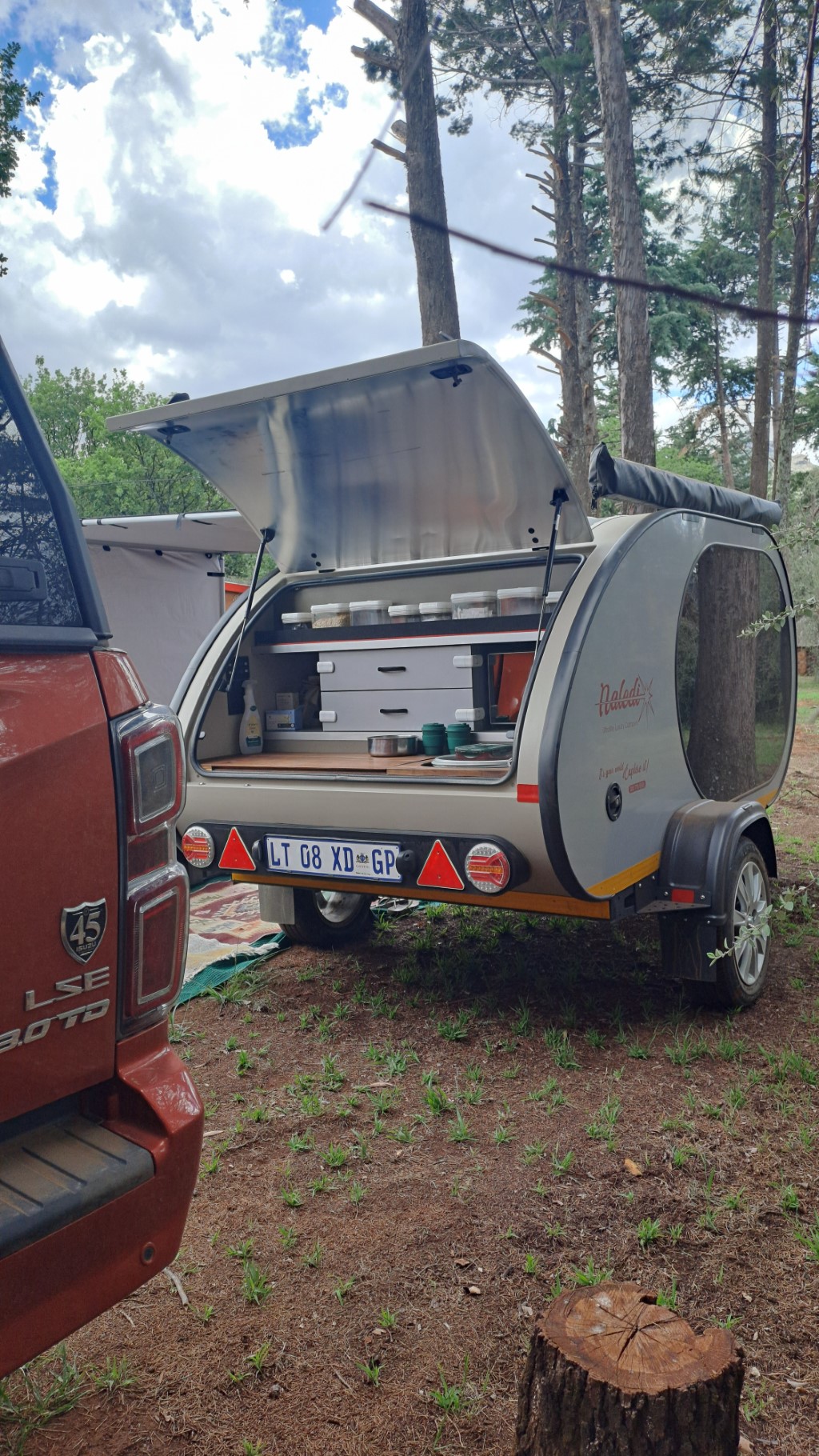
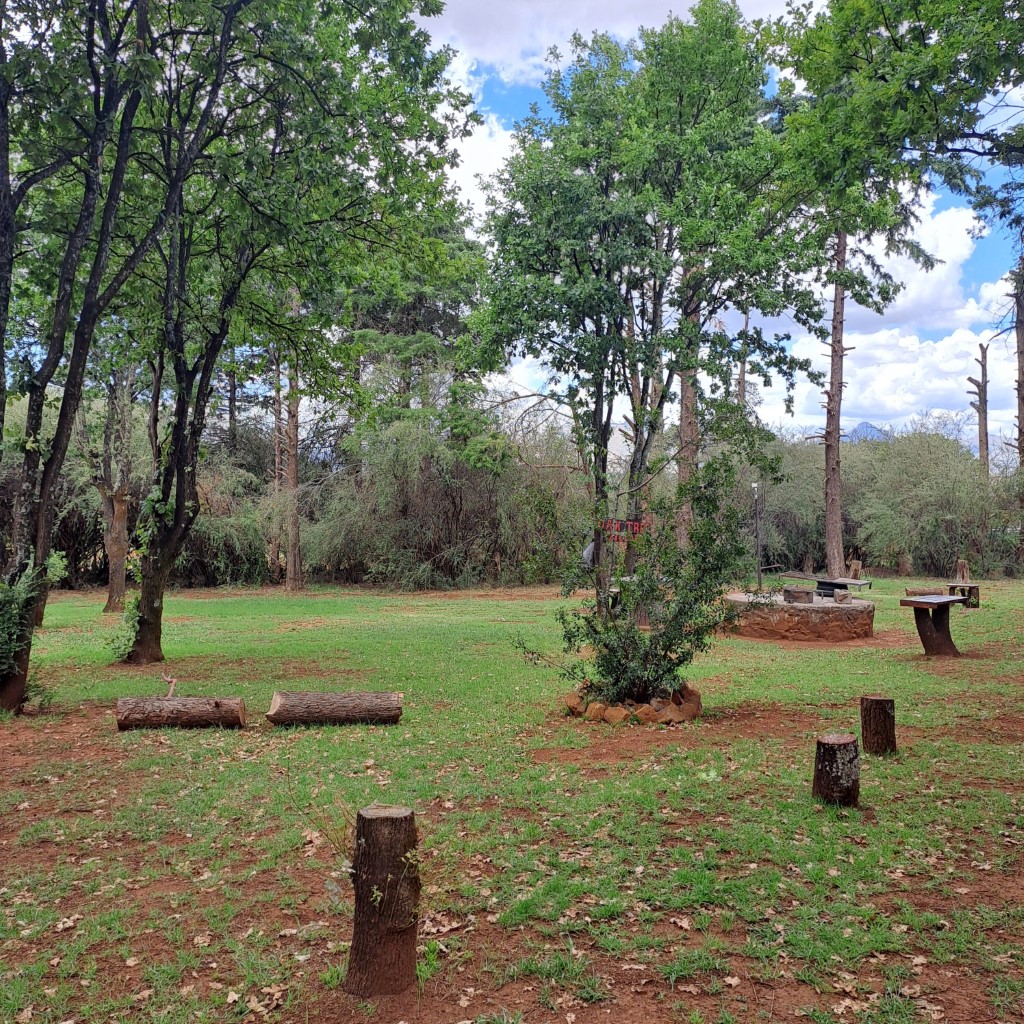


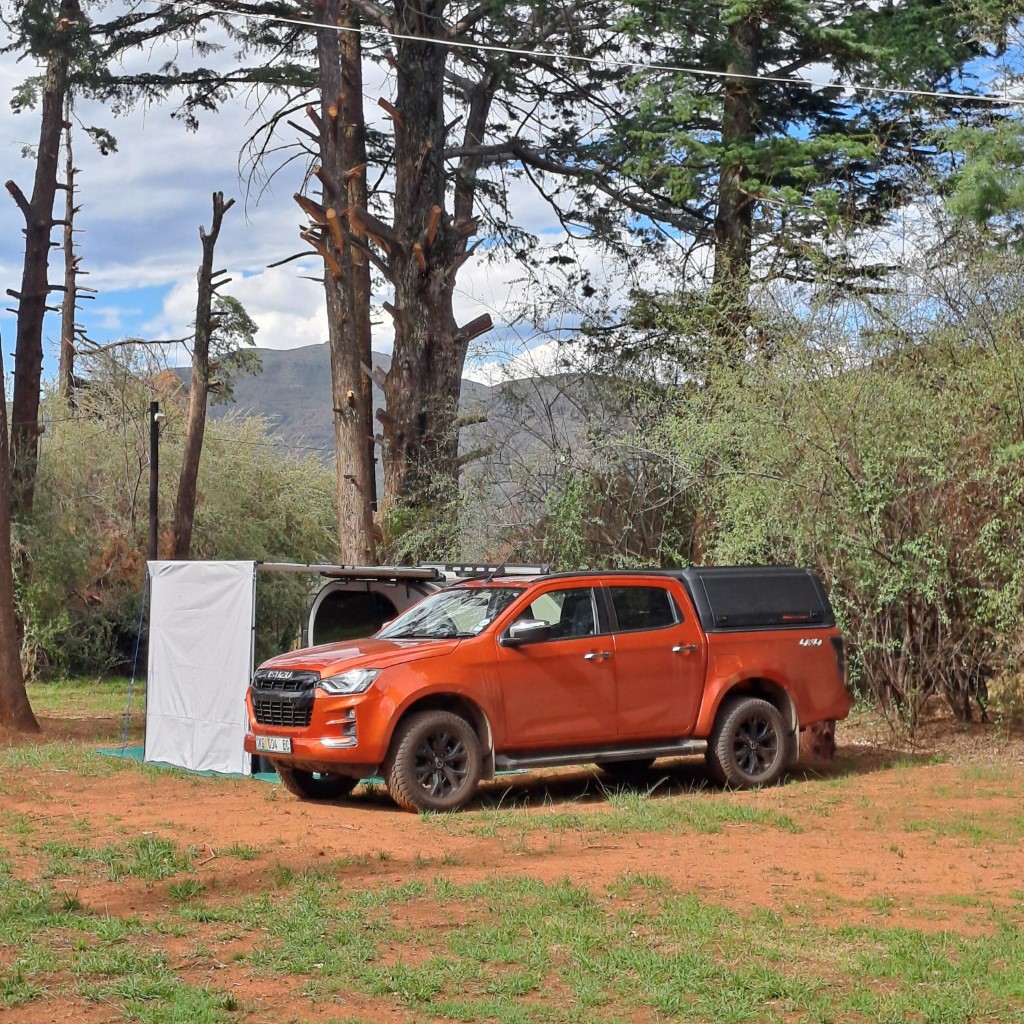

There are two communal self-catering kitchens with gas fridges and cookers that campers can use. These facilities are shared with visitors staying in the basic huts.
The two communal ablutions (for campers and hut visitors) at Malealea are basic but functional, and provide toilets, showers (hot water from gas) and washbasins.
Malealea Lodge runs on solar energy, so no electric hairdryers, flat irons, kettles, toasters, heaters, irons or any other heating appliances are allowed to be used.
Don’t be alarmed by the brownish water you’ll see coming from the taps in the ablutions and kitchens. Malealea is big on eco conservation – they get their water from the local spring and do not add any chemicals to it.
The tap water is clean to use for washing and bathing, and for brushing your teeth, but if you want drinking water it is available for purchase at the Bar.


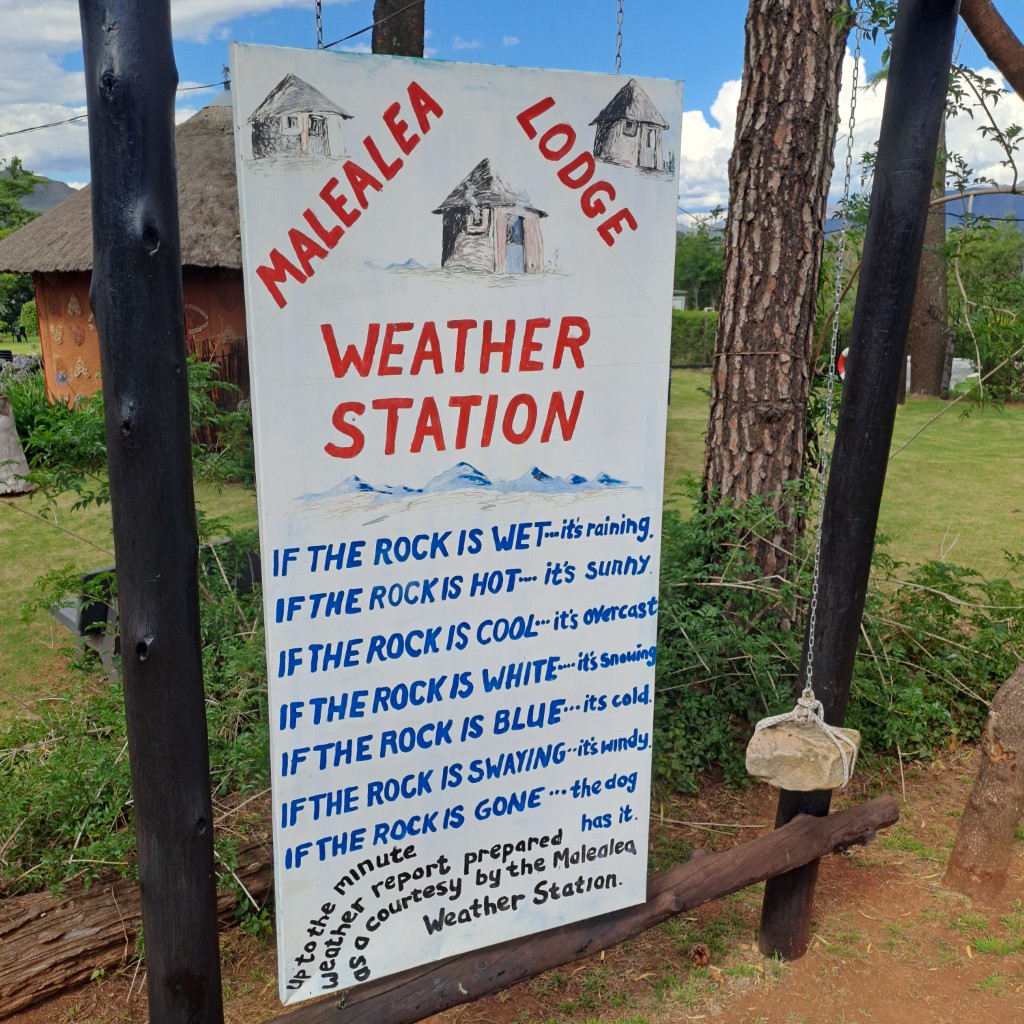
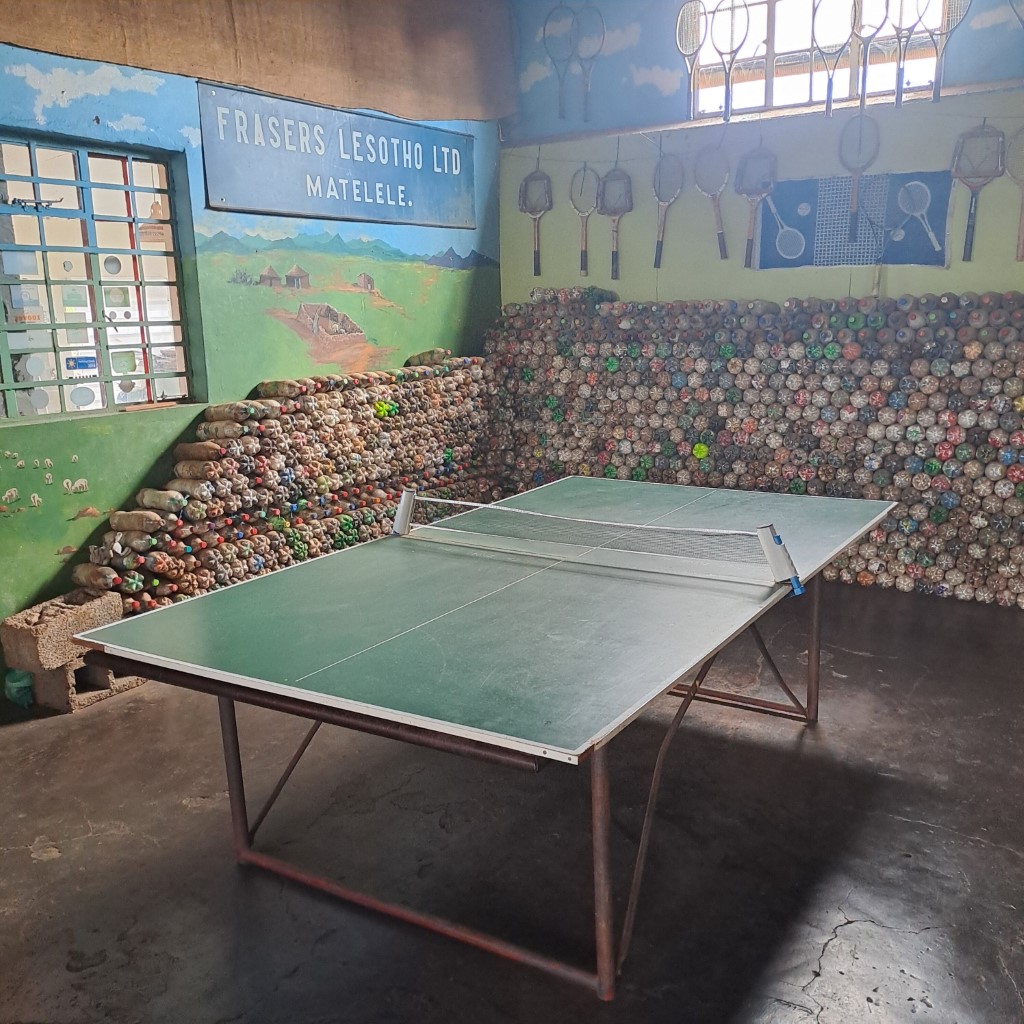
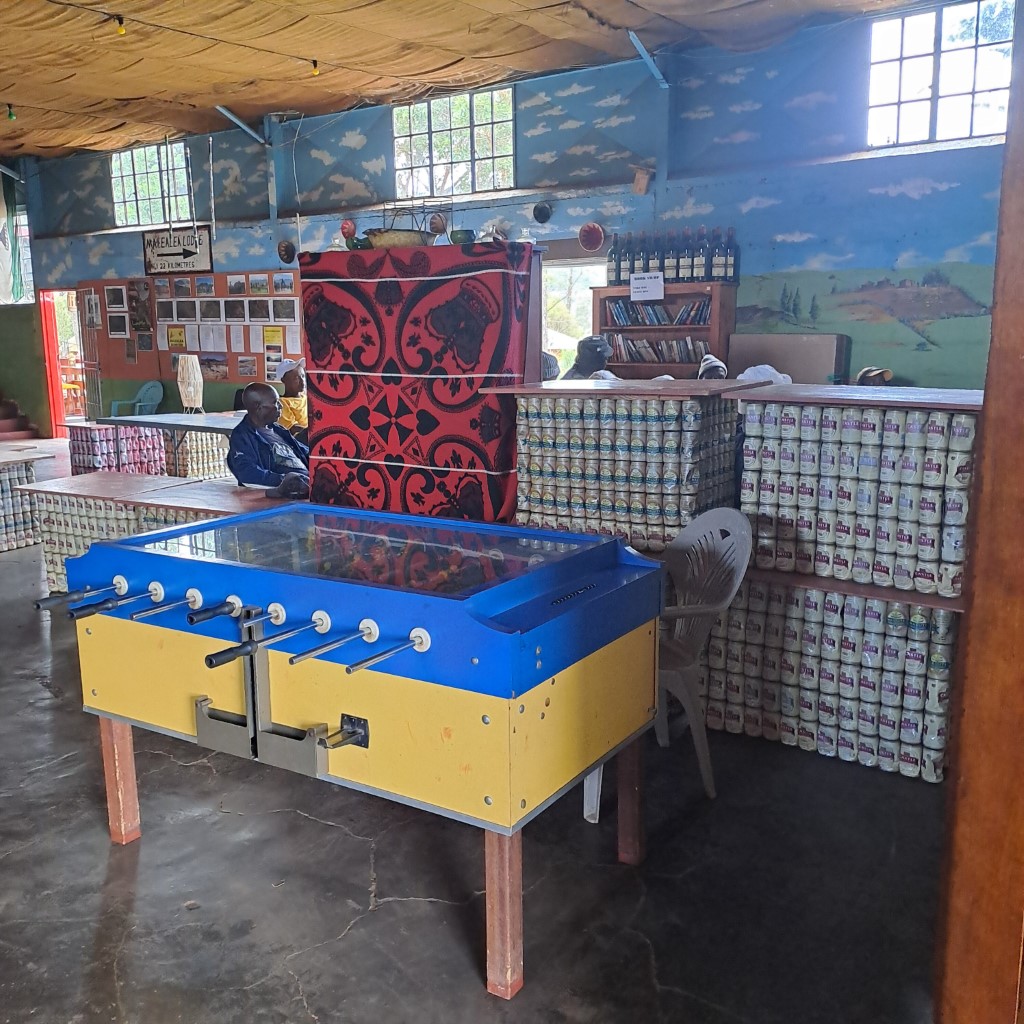



Speaking of the bar… it’s located at the main lodge building of Malealea, where there is also a restaurant, an entertainment hall with TV, foosball and pool table.
The restaurant has full breakfast, lunch and dinner menus. The sephaphata (traditional home-made bread) is a must-have, whether on its own, as a toasted sandwich, or a burger.
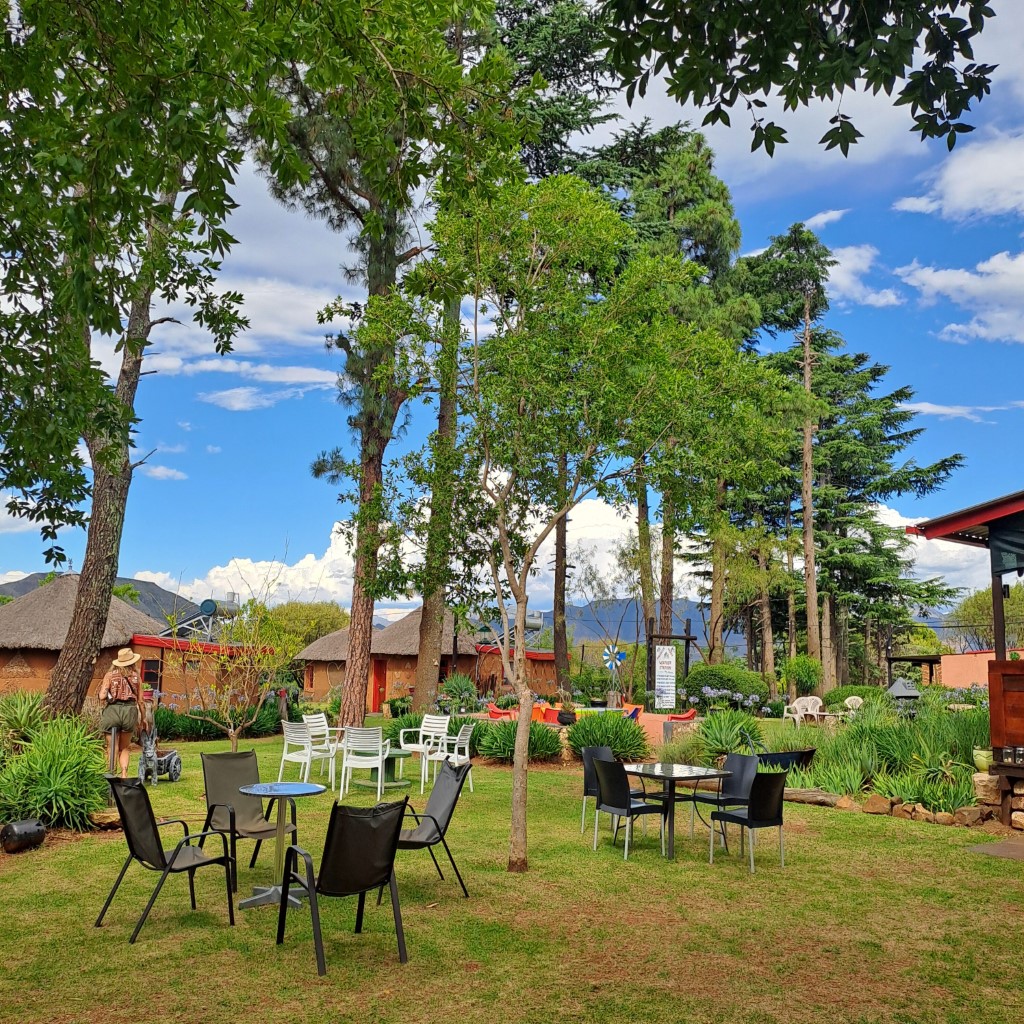
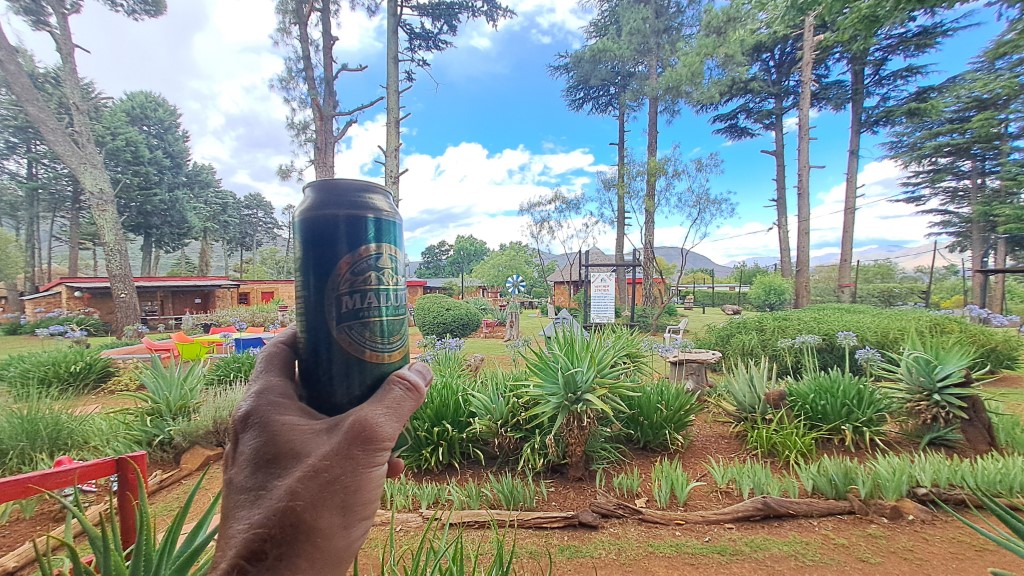
Enjoy your meal and an ice-cold Maluti Lager on the deck or in the stunning garden.
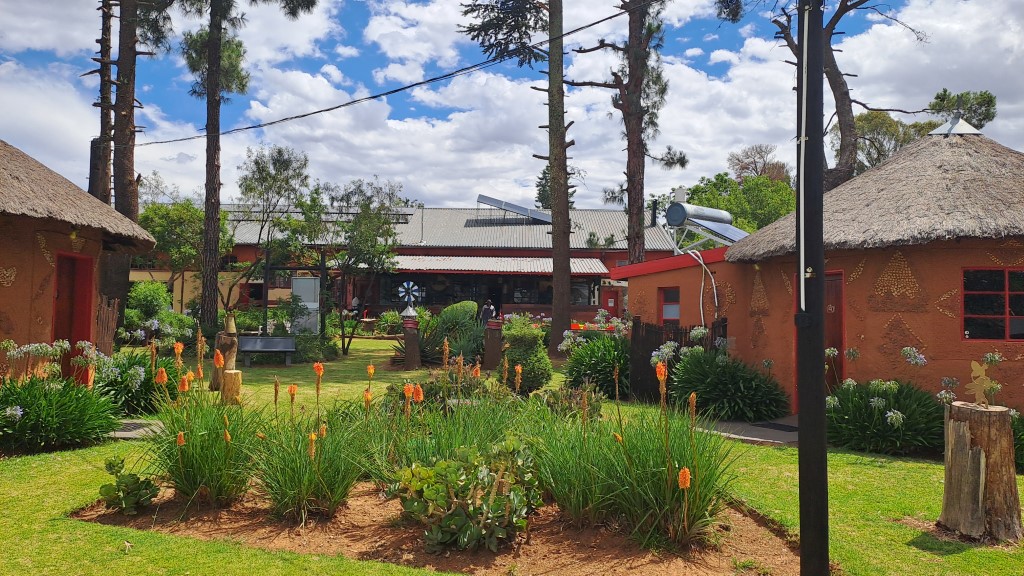
Malealea Lodge prides itself in being “Lesotho in a Nutshell” where you get to experience the “Real Africa”.
There is plenty of cultural interaction with the local village, and various Basotho choirs and a local Basotho Band, using their home-made instruments, entertain guests every evening.
For the more adventurous, you can explore Lesotho’s magnificent mountains, valleys, waterfalls and Bushman paintings on spectacular hiking, pony trekking and mountain biking trails. But we’ll get to that a bit later.
With our camp set up and having done a bit of exploring the lodge grounds – including walking the big bottle maze – we headed back to the Naledi to make dinner at the campsite. Portable braais are available, and we had a potjie planned (plus, making some extra braaibroodjies for the next day’s hike).

BOTSOELA WATERFALL & BUSHMAN PAINTINGS
With limited time on our hands, we decided to do two hikes.
Guides can be booked at the lodge’s reception, and I strongly recommend it; not only will they keep you on the right path, they’ll share insights into the region’s culture and ecology that you’d likely miss on your own.
Our first outing at Malealea was the Botsoela Waterfall hike, a brilliant way to appreciate the dramatic topography of Lesotho.

The hike starts on a mostly level path along the top of the valley, where you pass the Handicraft Centre and the Makhetheng Primary School. A short distance beyond the school, you reach a fork where you bear left towards the village of Malealea, high above the Botsoela River.
From here, the trail begins a steeper descent down into the valley, leading you to the river’s edge.
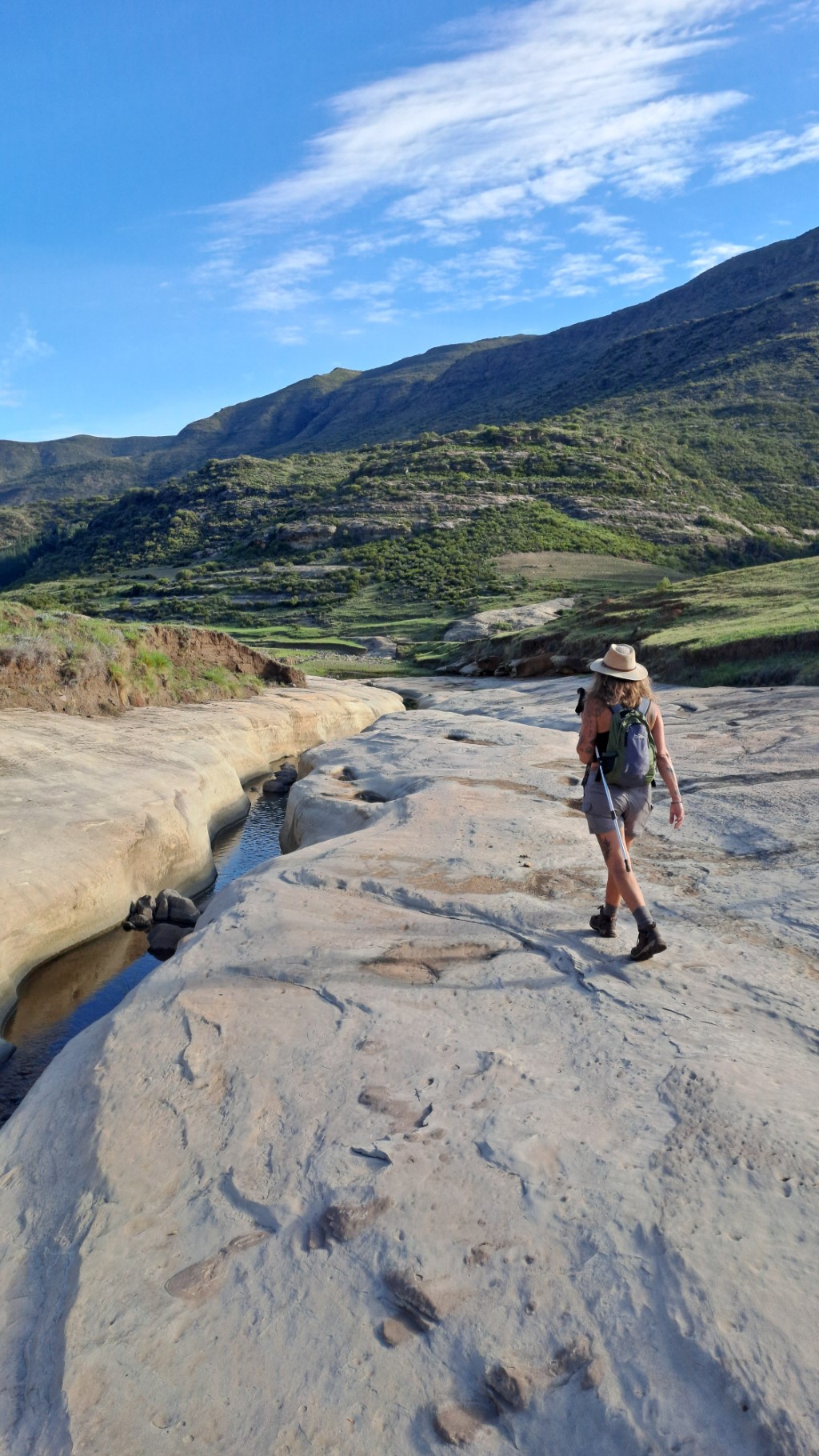
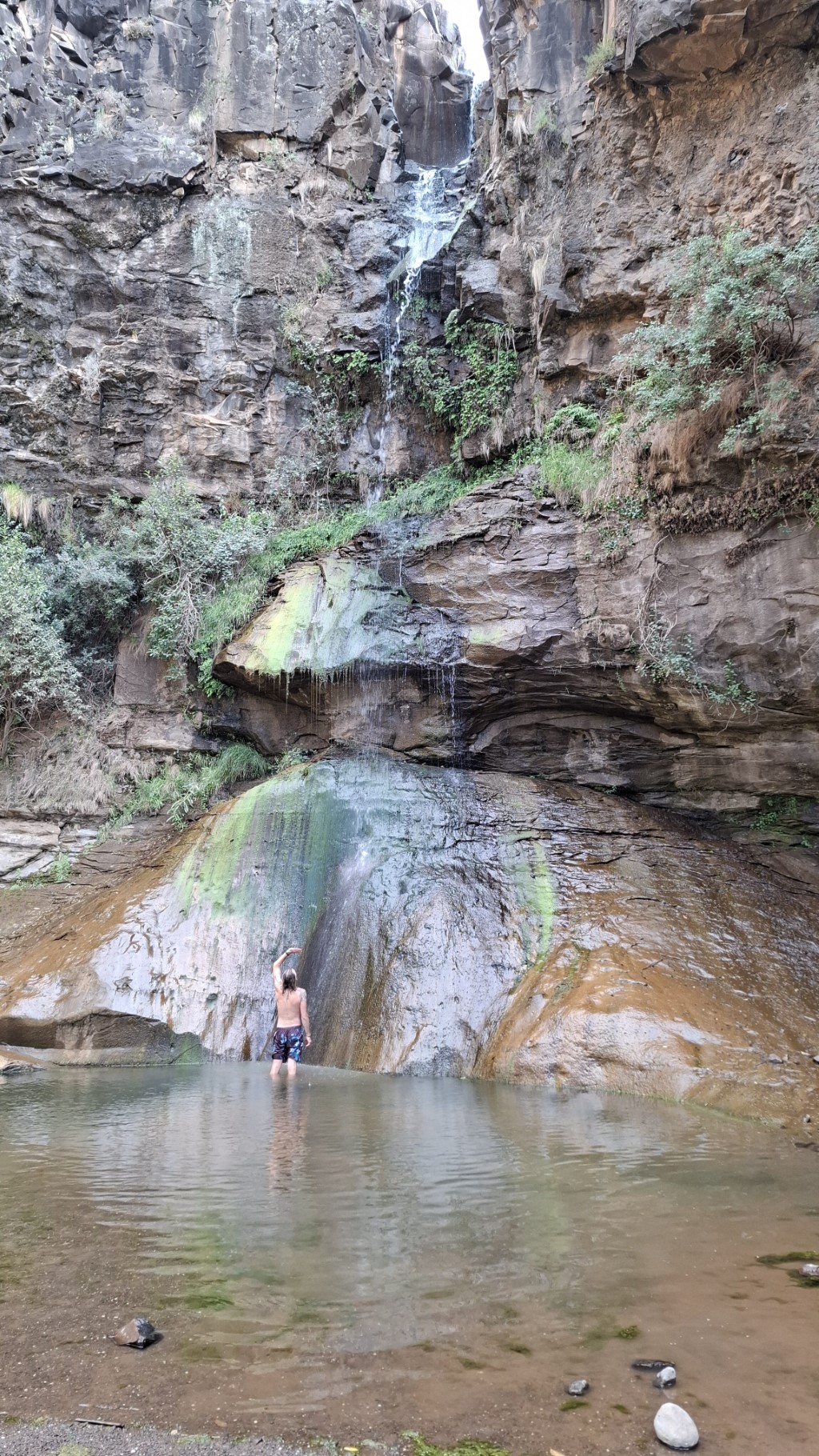
The next hour involves criss-crossing the stream, with the occasional boulder hop, and finally arriving at the base of the waterfall itself.
Even though Lesotho was in the grips of a severe drought, the waterfall at the heart of this route was still flowing.
We took the chance to slip into the cool water for a refreshing swim, grateful for the momentary relief from the heat.
After the waterfall, we set our sights on the Bushman Painting hike, which proved more challenging.
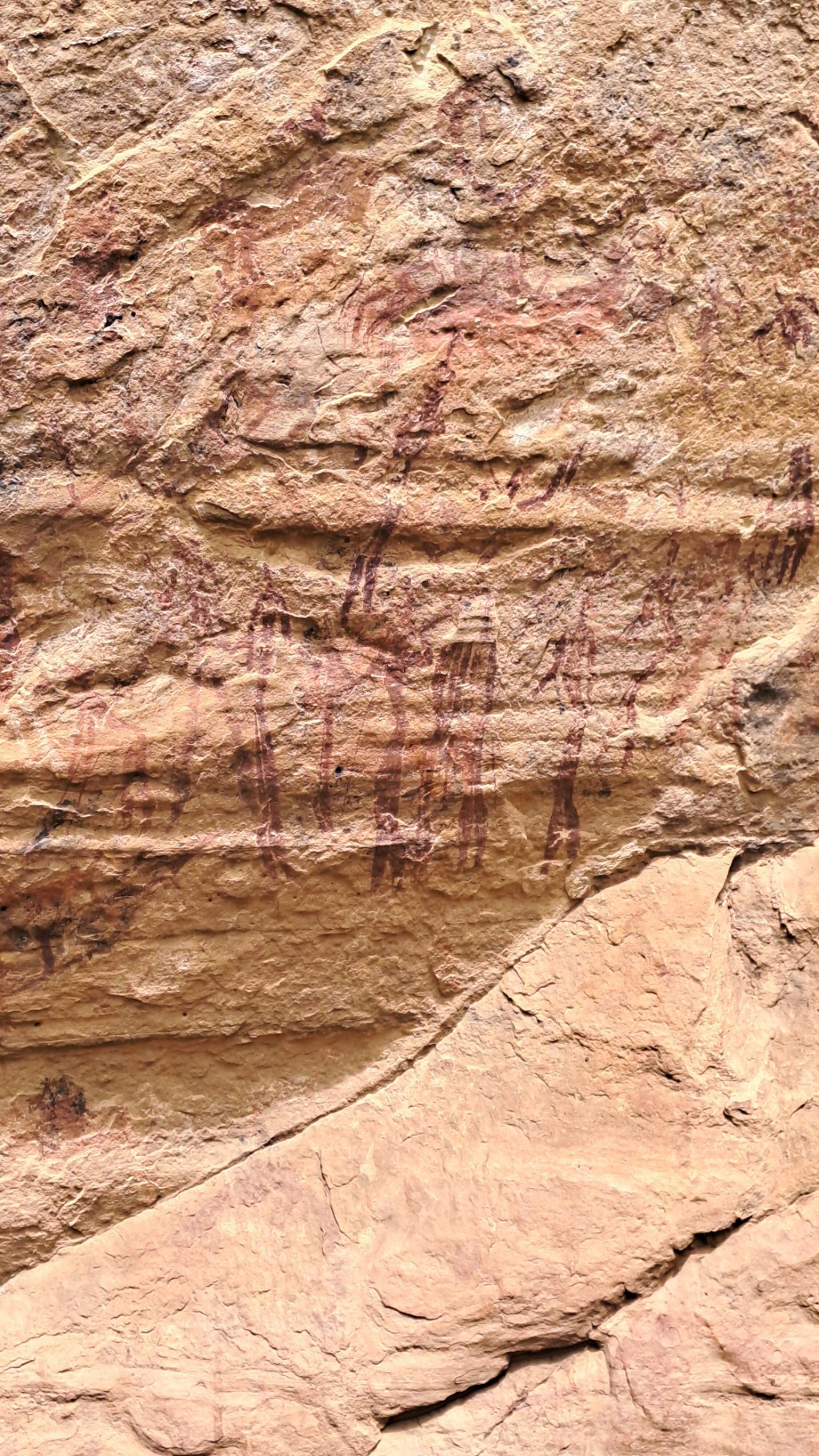
Retracing most of the Waterfall path, you first climb back out of the valley, then traverse through the fields and follow the path to the village of Molefe. From here drop down into the gorge where the path descends to the Echo Cave.

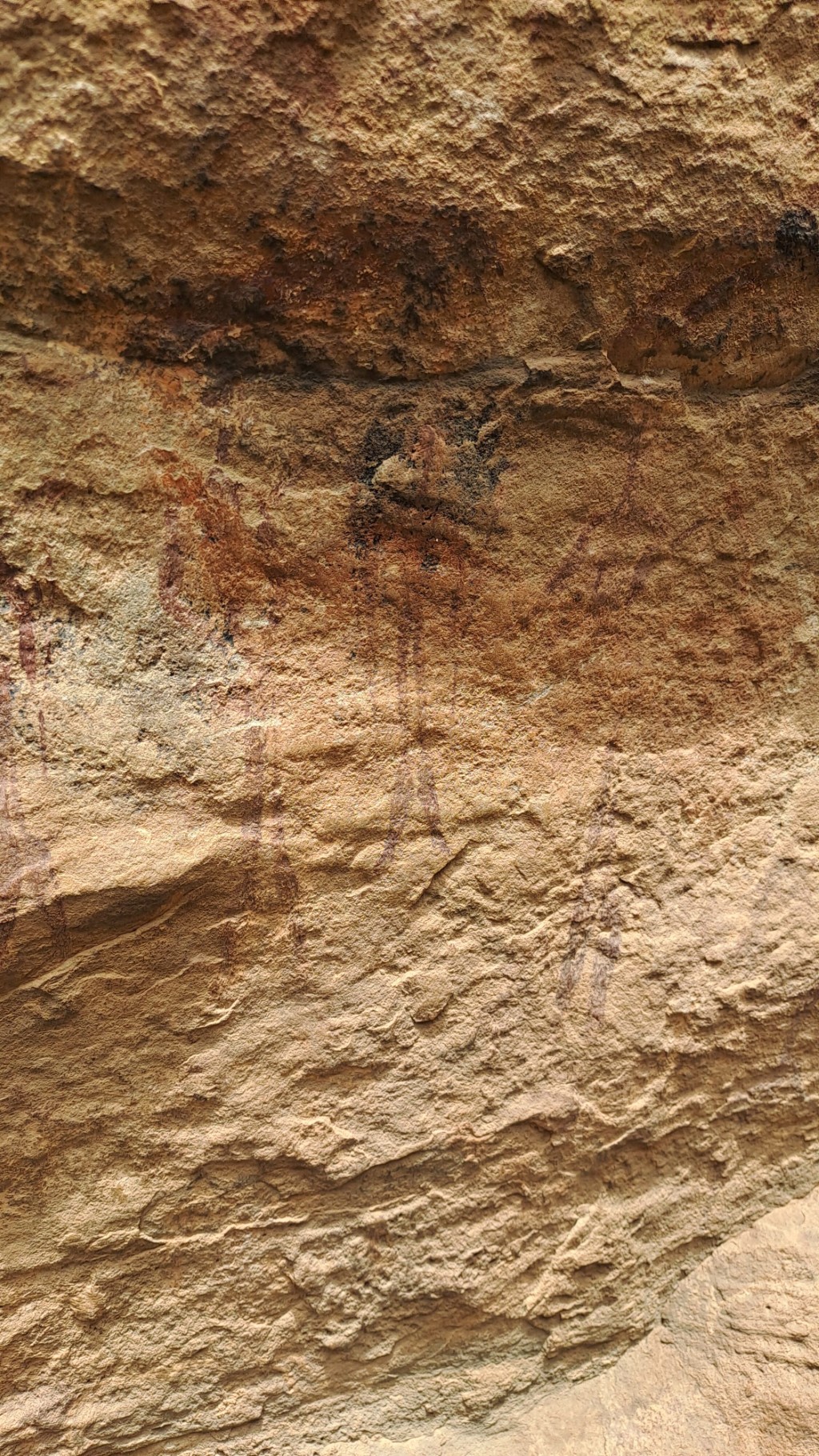
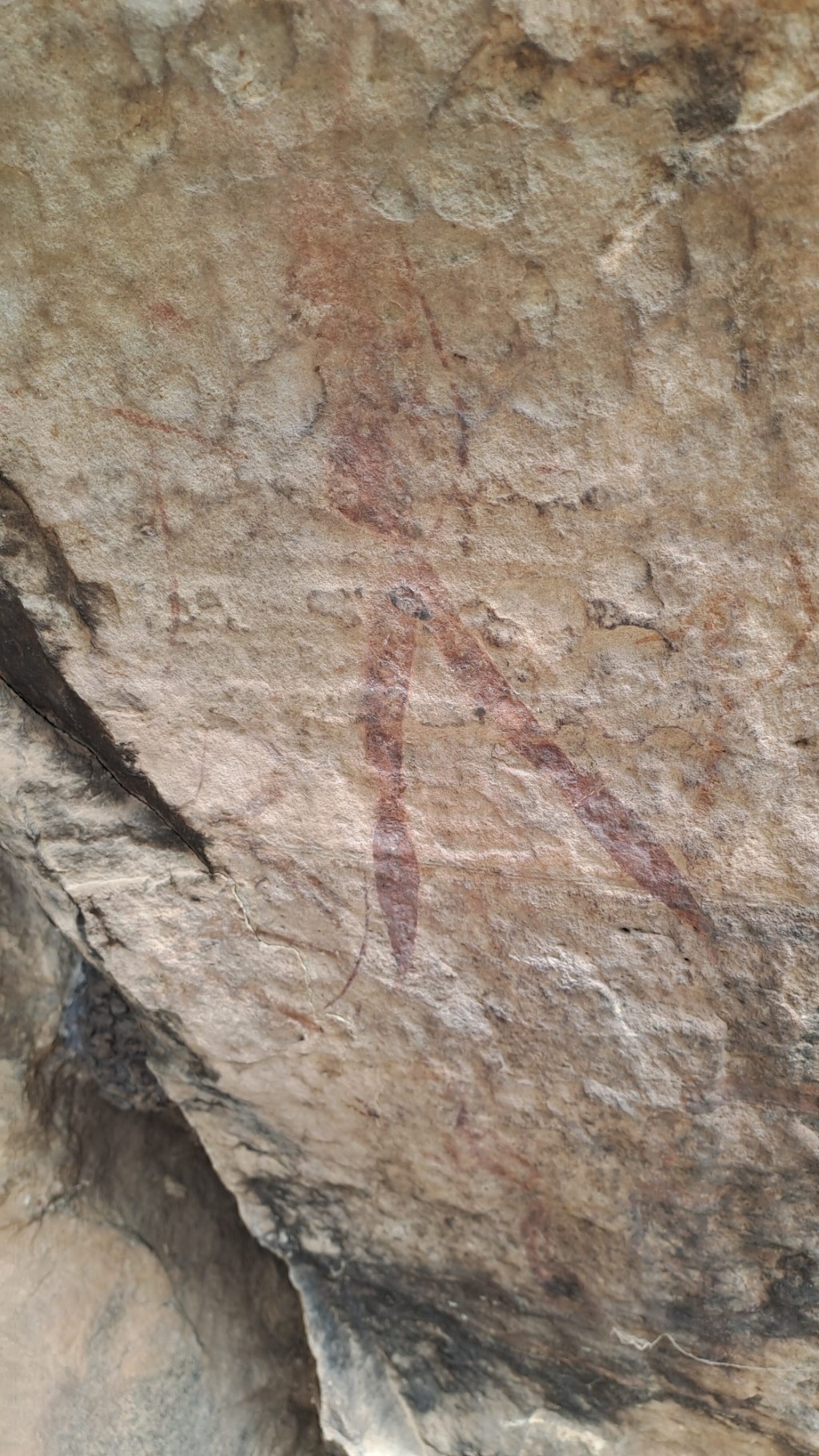
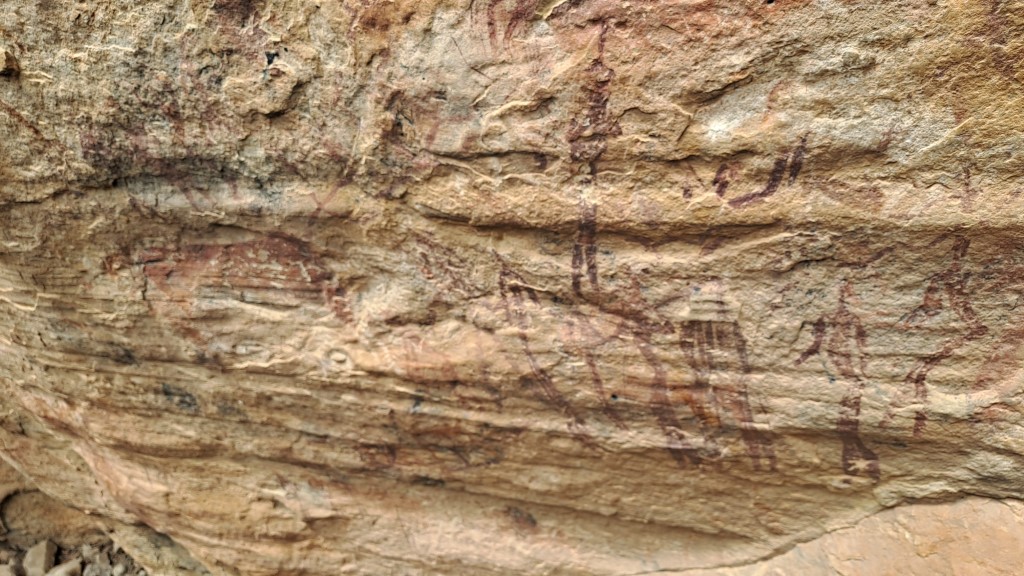
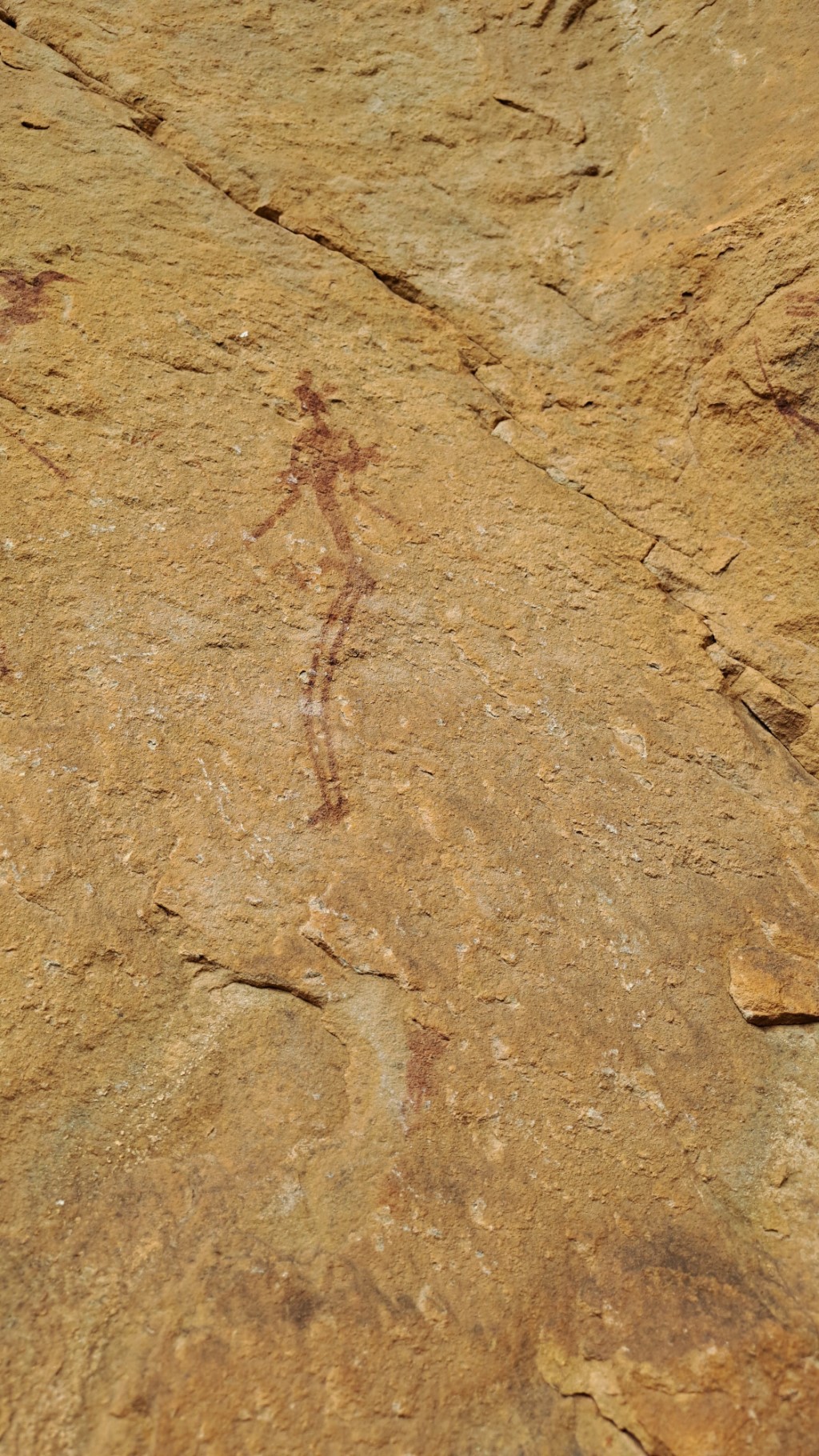
The ancient rock art is well hidden, perched down another slope that demands a bit more energy, but the sight is unforgettable.
These paintings are among the oldest traces of human life here, and there is something humbling about seeing them in their natural setting, worn by centuries yet still vivid enough to recognise.



The route back to Malealea Lodge was practically all uphill and under a blazing midday sun, despite our early start. By the time we stumbled up the final incline, my legs were tired, my feet sore, my shirt soaked, and I joked with one of the staff members about needing a spa.
Their answer was a mischievous grin and the offer of a “Maluti massage,” which turned out to be a cold Maluti beer.
Sitting on the deck with that ice-cold bottle in hand felt as restorative as any full-body treatment could have been.
A plate of hot food from the restaurant, and a quick catch-up with the outside world via the lodge’s pay-as-you-go Wi-Fi, put us right again.
When our strength restored, we headed to camp for a quick shower before returning to the lodge gardens to watch the evening performance by the local choir and band.
GOODBYE LESOTHO
After a well-earned night’s rest, we unfortunately had to say goodbye to Malealea Lodge and Lesotho.
We had a long drive ahead of us, as our next destination was Camdeboo National Park.
Once more, we navigated the rugged dirt road out from Malealea, and again I was impressed with how easily and comfortably the D-MAX handled the terrain, and how effortless the Naledi cruised behind.
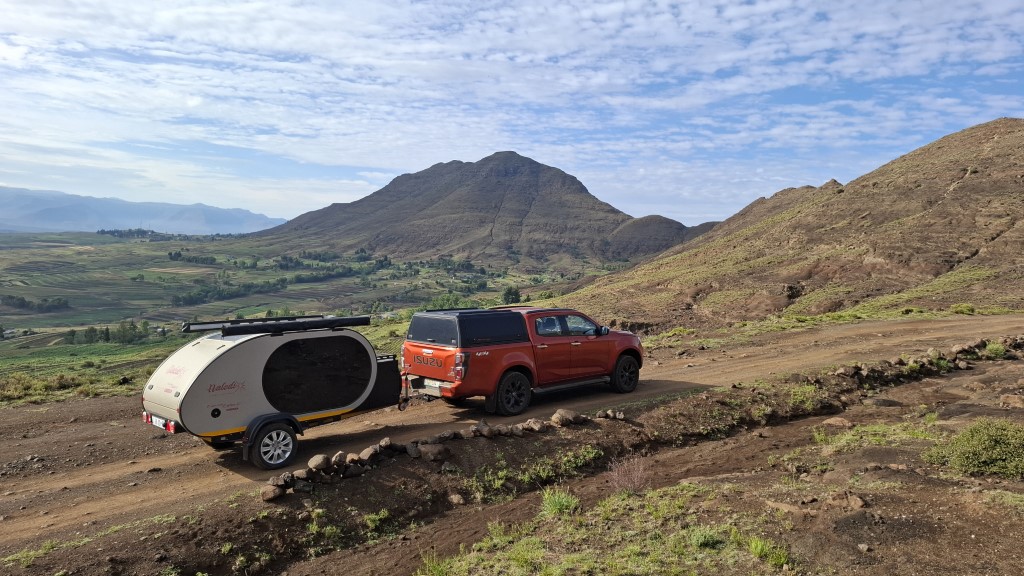
After hitting the tar road, we continued on to the A2, and turned left towards Mafeteng – planning on exiting Lesotho at the Sephapos Gate. It’s only 75 kilometres, but will take you at least an hour and a half. The last section of this route is also a dirt road, which is very bumpy.
The Sephapos border post is tiny, just one small building on the Lesotho side, and another on the South African side. There were no other travellers in sight, so getting our passports stamped and heading through took less than 10 minutes.
From here our route took us down to Zastron, Rouxville and along the northern border of the Eastern Cape towards Middelburg and finally Graaff-Reinet.
After a quick stop in town for a few supplies, we headed to Camdeboo National Park.
NQWEBA CAMPSITE – CAMDEBOO NATIONAL PARK
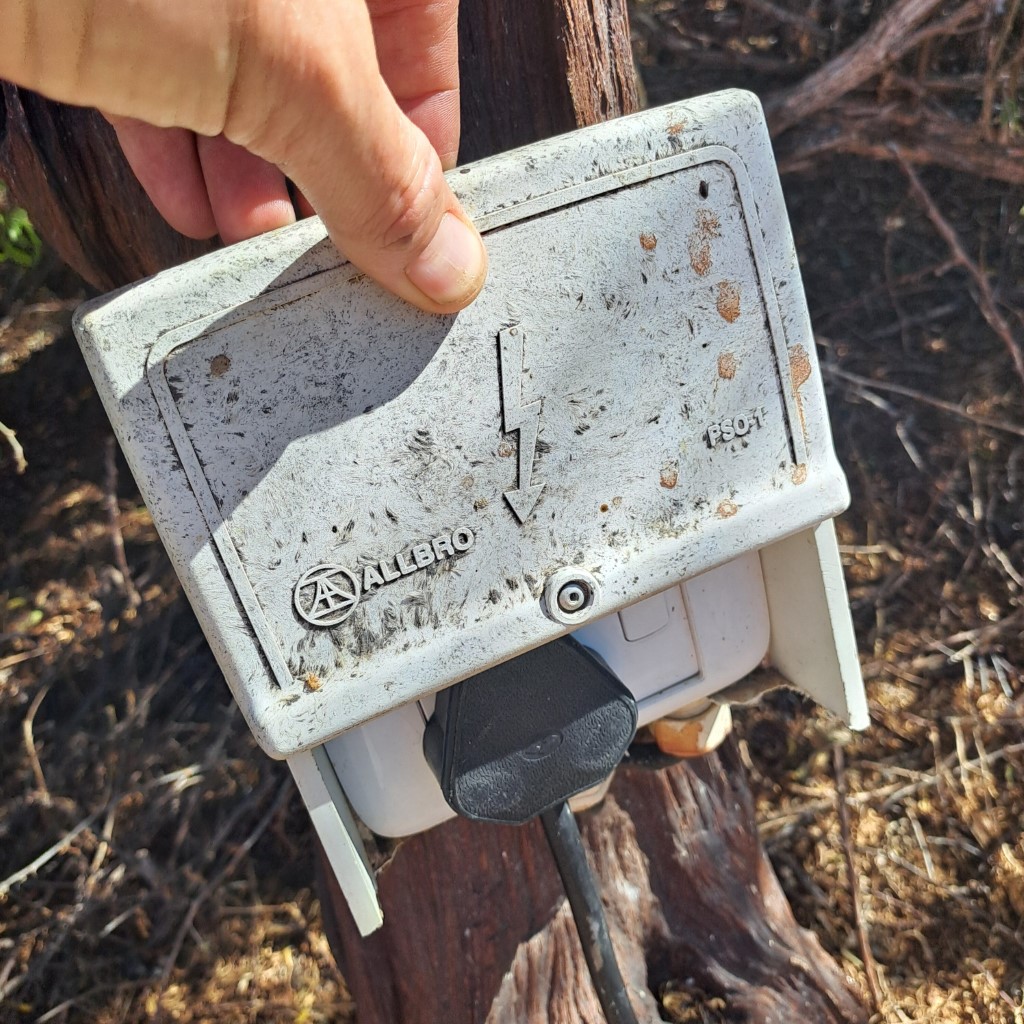
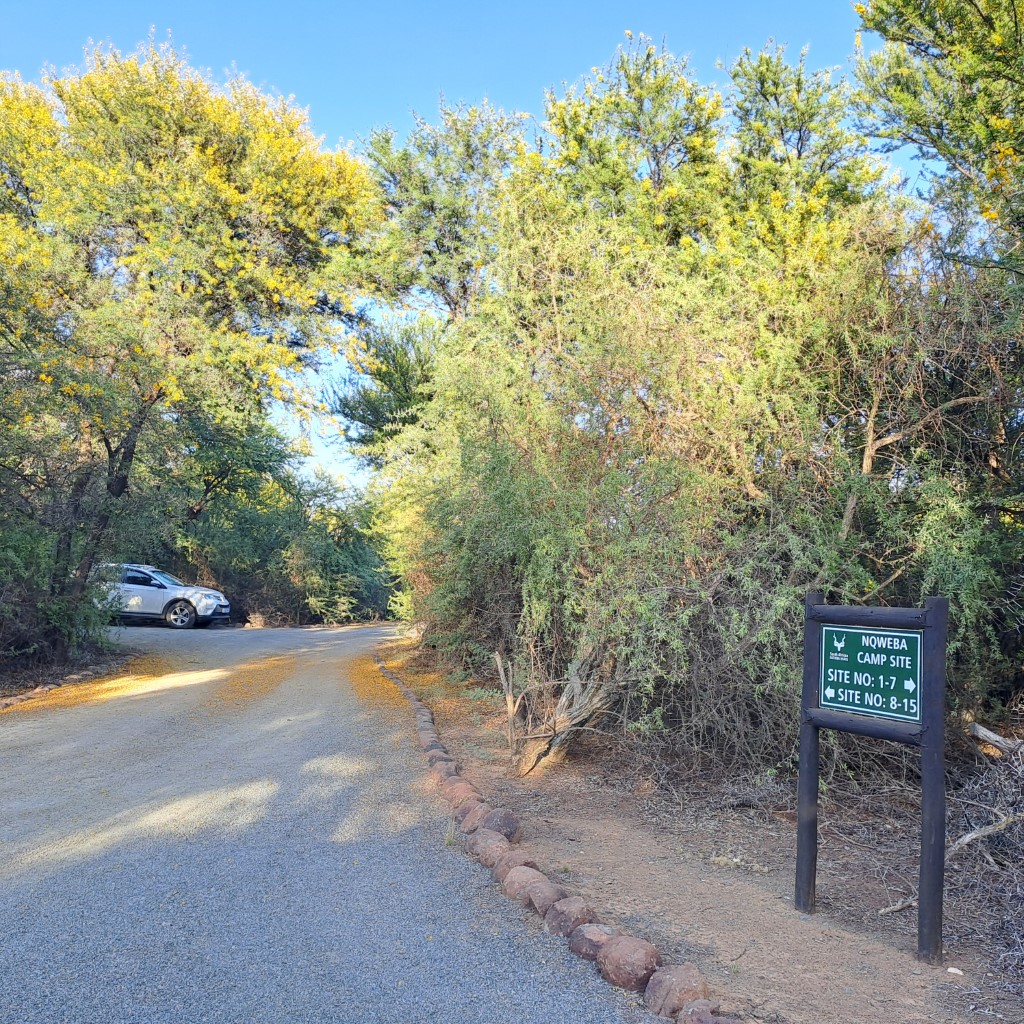
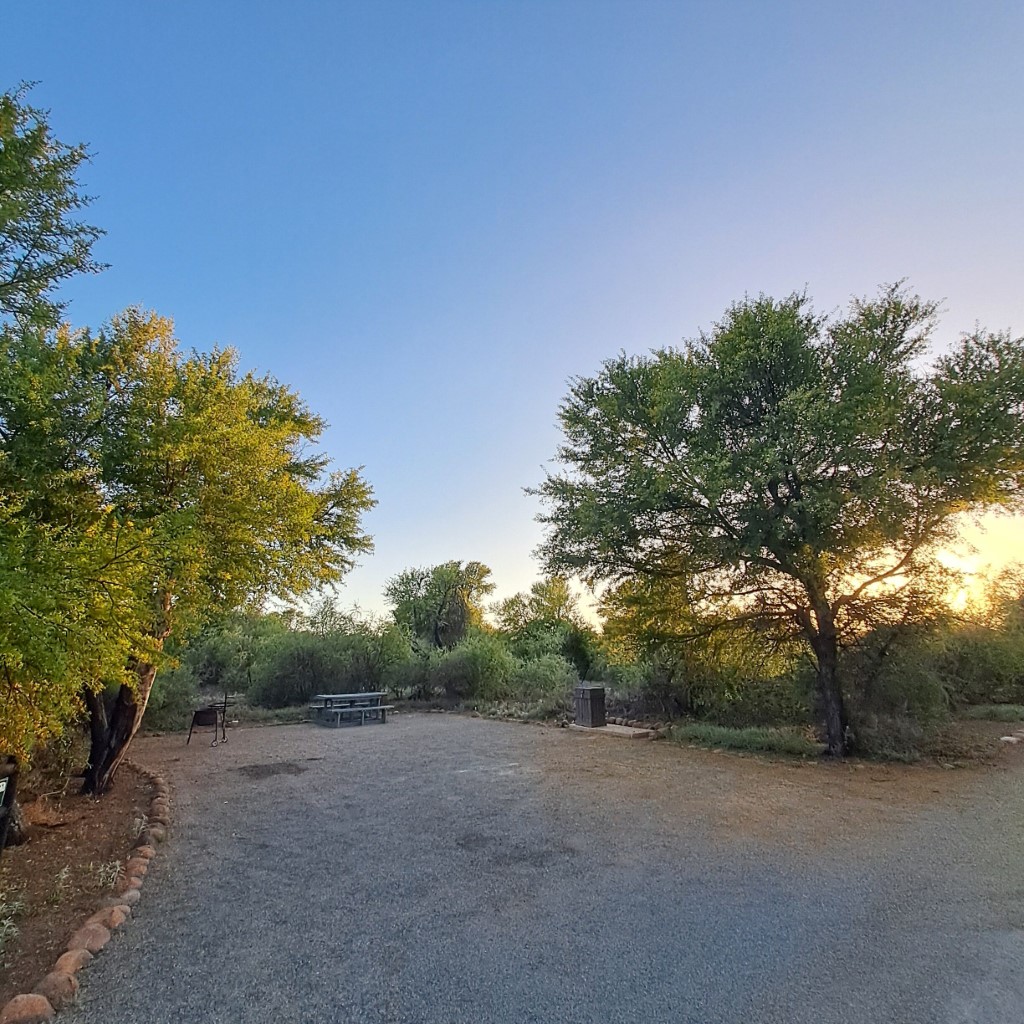
Nqweba Campsite in Camdeboo National Park is a neat cluster of fifteen stands set on raked gravel beneath shady thorn trees, each one kitted out with a braai unit, power point, water tap, and picnic bench.
Positioned near Graaff-Reinet at the edge of the Nqweba Dam, the campground lies in the park’s game viewing area, where you might catch sight of springbok, Cape buffalo, or even the occasional black wildebeest patrolling the plains.
Access is through the Lakeview Gate off the N9, and once you’ve passed the gate staff – always ready with a friendly hello – you roll through the park’s arid yet striking landscape until you reach the campsite.
Once you’re checked in, you drive into the camp and pick whichever of the 15 stands appeal to you (and is available), and settle in.

Each stand has a braai, its own tap, a power point, and even a picnic bench.
This was the first time on the entire trip that I connected power to the Naledi – we have been running off the solar for more than a week!
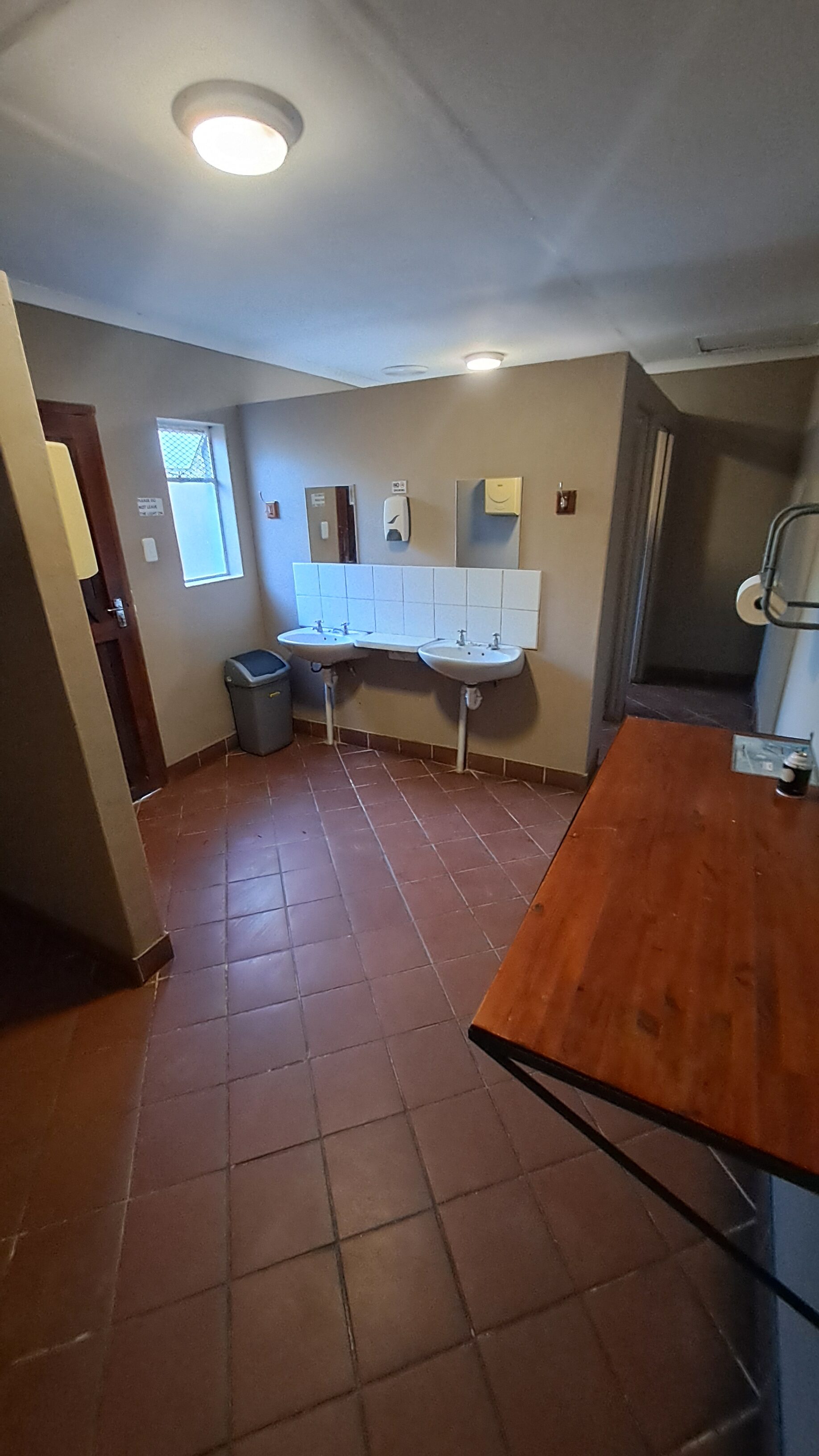
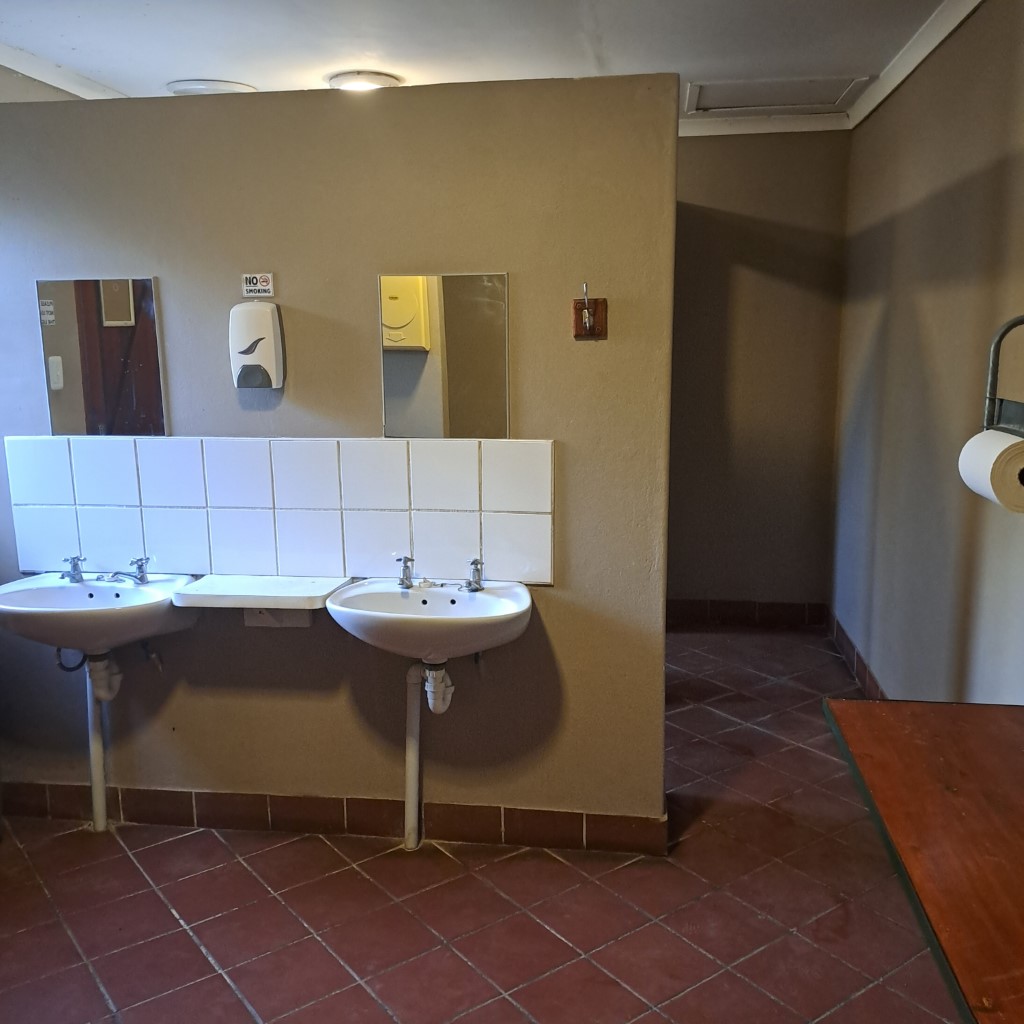
The facilities at Nqweba are surprisingly well-appointed. The communal ablution block features spacious showers and flush toilets, including a unit with universal accessibility, and there is a shared kitchen equipped with a stove, microwave, and deep freeze for campers who want an easier go of mealtimes.
The sites themselves are separated by thick vegetation, giving each stand a sense of privacy that is often lacking in busier parks.

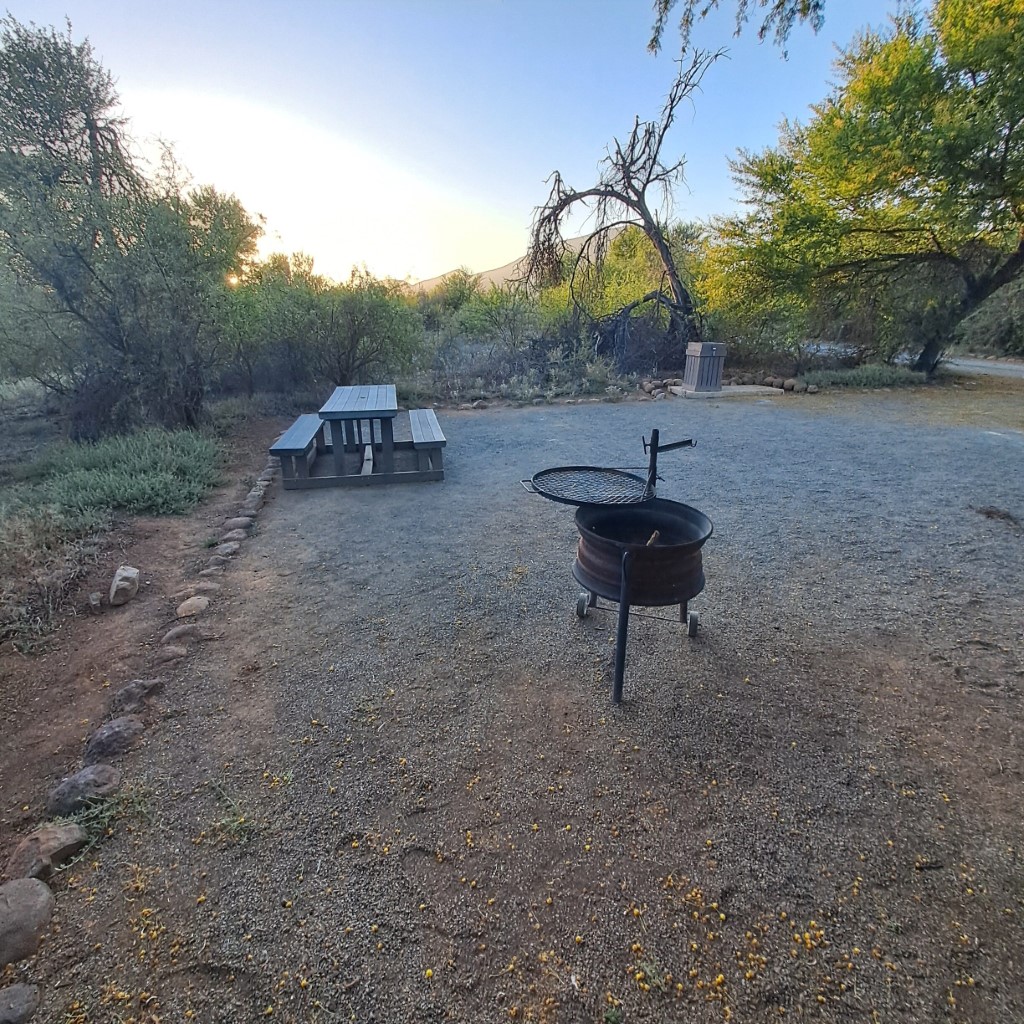






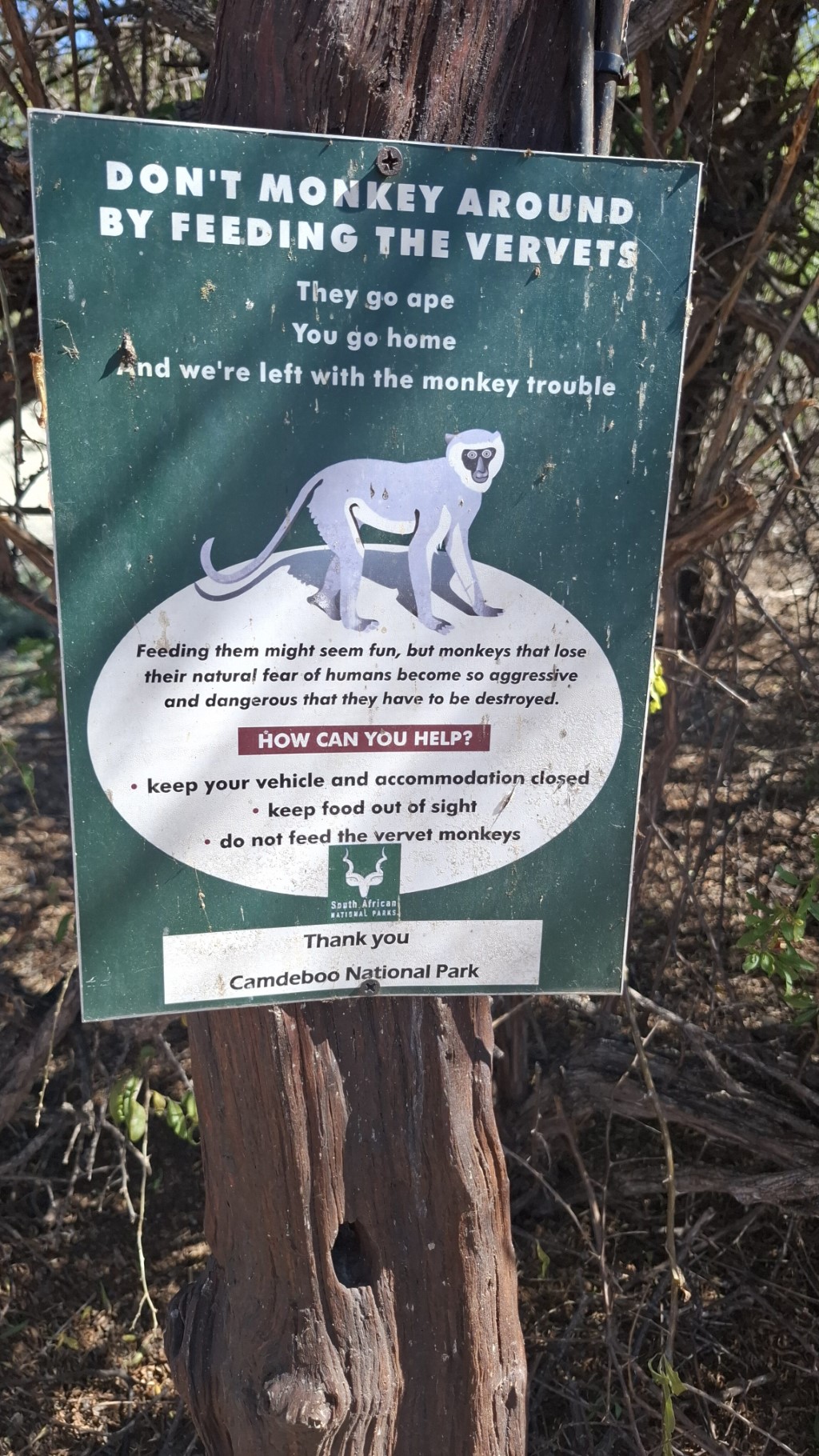
It’s a good idea to keep your food locked away, since the resident vervet monkeys are skilled opportunists. The park staff do warn you about them at check-in, and they’re not joking: if you leave anything tasty lying about, the monkeys will come sniffing.
By the time we had set up, the temperature had reached about 38 degrees. We would have liked to go for a swim, but there is no pool at Nqweba. The staff said we could dip in the dam (at our own risk), and pointed us in the direction of the fishing area. This didn’t work out – the road is obviously rarely used and overgrown, with large thorn trees overhanging the path, so we turned around not to scratch the vehicle.
We were not out of the campsite long, but by the time we got back, we saw the vervet monkeys had paid us a visit. All our food and gear were securely closed, which apparently irritated the little critters, who showed their annoyance by defecating on the caravan and our picnic table.
So we just had a shower to wash off the long day’s drive, and we settled into our beautiful campsite, enjoying a big braai for dinner!
Camdeboo offers plenty of diversions, from day visitor picnic spots and 4×4 routes to impressive birdlife – almost 250 species recorded so far – and an array of mammals that are well-adapted to the Karoo’s harsh climate. Ostriches, gemsbok, and springbok are often seen in the more open areas, while kudu and buffalo prefer the thicket.
Even if you only have time for a short drive, it’s worth exploring the park’s corners to witness the complexity and resilience of this semi-desert environment.
VALLEY OF DESOLATION
The next morning, we headed for the Valley of Desolation, a highlight of Camdeboo National Park just outside Graaff-Reinet.
The short drive up to the viewpoint is a dramatic climb, revealing ever-wider glimpses of endless Karoo plains.
At the top, you have to park your vehicle and take a short hike to the first viewpoint. There is something almost surreal about seeing tall dolerite pillars rising in the distance like ancient sentinels, some reaching well over a hundred metres above the valley floor.
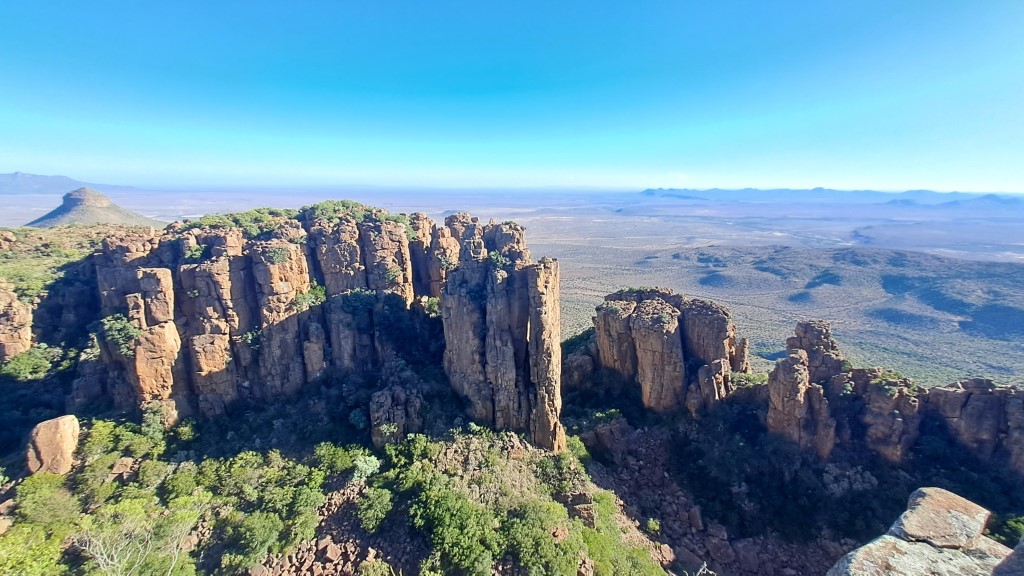
Locals call this place the “Cathedral of the Mountains,” and standing at one of the clifftop lookouts, it’s easy to see why.
It’s no secret that summer temperatures in this part of the Karoo can be punishing, so I’d advise tackling the viewpoints or nearby hiking trails early in the day.
The Crag Lizard Trail, which snakes around the vantage points and across the rocky terrain, is relatively short but can feel challenging if the sun is scorching.
Still, as soon as you find yourself on a ledge overlooking those sheer drops and great basalt pillars, the heat is forgotten.
From that vantage, the view stretches over plains dotted with aloes and scattered shrubs. It’s the kind of panorama that makes you realise why so many people consider the Valley of Desolation to be one of the Karoo’s most extraordinary sights.

HEADING HOME
The next day, with visions of the Valley of Desolation still in our heads, we packed up our campsite in the lingering glow of the Karoo sunrise.
The road home beckoned, carrying us away from Graaff-Reinet and ultimately guiding us back to the familiar vineyards and sea breezes of the Western Cape.
Each kilometre seemed to unravel the narrative of our journey one scene at a time – the billowing thunderheads of the Free State, the invigorating heights of Lesotho’s mountain passes, and the tranquil Karoo nights spent by the braai in Camdeboo.
It was one of those bittersweet returns, where the comfort of home mingles with a sense of longing to stay out there just a little longer, discovering one more mountain pass or hidden waterfall.
The D-MAX was dusty but unflagging, and the Naledi carried the memories of all those mornings waking up to entirely new vistas.
By the time we crested the final hill towards home, I found myself already flipping back through the mental snapshots of the journey: crisp highland trails, breathtaking sandstone silhouettes, the laughter of local guides, and the rewarding ache of well-earned miles.
They say the best trips never truly end, and as we pulled into the driveway, it was impossible to disagree.